
Child’s Play?
You might think that learning to brush your teeth is something you do as a child, and then that’s it. Like tying your shoe laces? It would seem not. Research by Oral-B in the UK has shown over 75% of Brits are currently not using the right brushing technique. This can result in plaque build-up, tooth and gum decay. And according to their research, 35 to 44-year-olds are the worst when it comes to brushing incorrectly.
What should we be doing?
The British Dental Association recommends the following brushing practice;
- Place the head of your toothbrush against your teeth, then tilt the bristle tips to a 45-degree angle against your gumline. Move the brush in small circular movements, several times, on all the surfaces of every tooth.
- Brush the outer surface of each tooth, upper and lower, keeping the bristles angled against your gumline.
- Do this again, but on the inside surfaces of all your teeth. To clean the inside surfaces of your front teeth, tilt the brush vertically and make several small, circular strokes with the front part of the brush.
- Brush the biting surfaces of your teeth.
- Brush your tongue to help freshen your breath and clean your mouth by removing bacteria.
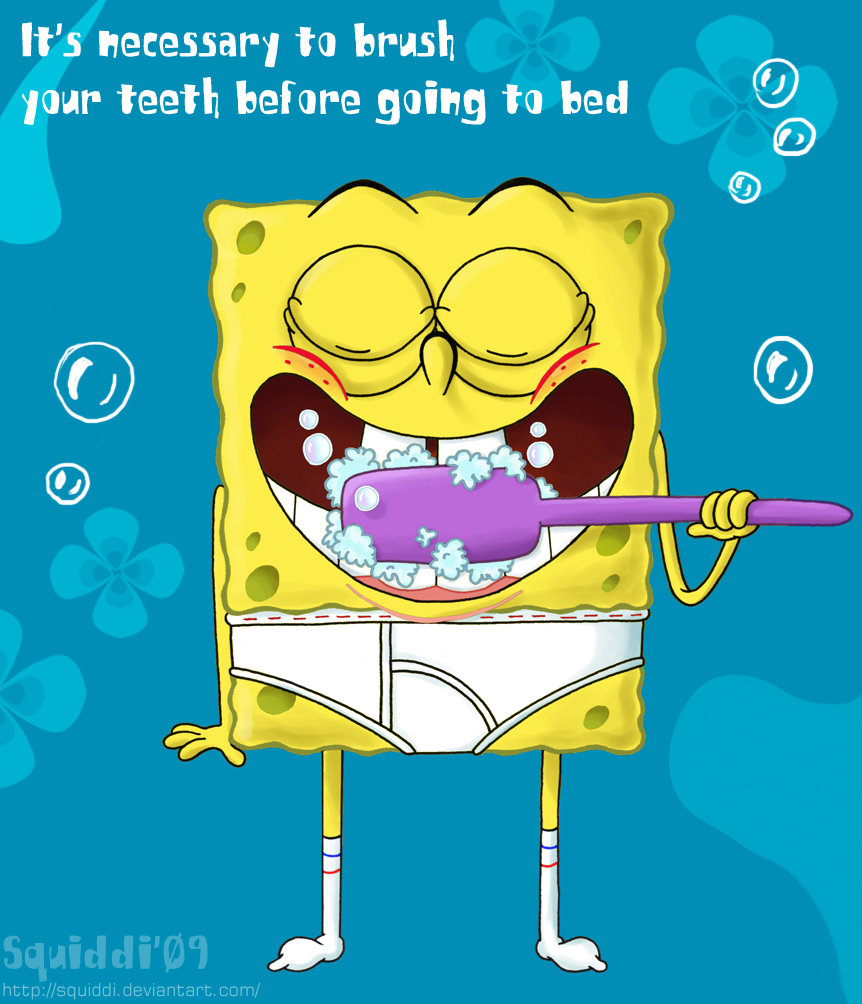
Cartoon characters help teach kids to clean their teeth. Who reminds the adults?
There are even You Tube videos for you to check your technique! This one is quite short and sensible.
Prevention is more sustainable
Regular dentist check ups will ensure that any issues are caught early. Dentists are not high on my list of sustainable industries. Much in a dentists room is covered in disposable plastic, or is single use for hygiene reasons. So the less dental work you have, the cheaper it is for you, and the less disposable items your dentist is using.
What about making my own toothpaste?
There are a number of online recipes for toothpaste including SOS Seas and DIY Natural. The ingredients cost work out as follows;
- bicarbonate of soda (also called baking soda) £1.35 per 200g / 1.5 tbsp 22g 15p
- peppermint oil £10.99 10ml / 25 drops (1.5ml) £1.64
- Total = £1.79.
In comparison my normal Kingfisher toothpaste costs around £3.19 so there is not much of a cost saving. However these ingredients may come in containers that are easily recyclable, unlike commercial toothpaste tubes, see part 1 for more on this. Also you know what is going into a homemade one, unlike some commercial ones, see part 1 for more on this as well.
My compromise
My new happy medium is Georganics organic natural toothpaste. It has no fluoride, or SLS foaming agents. It feels very different to a “normal” toothpaste, but you get used to it and my teeth feel very clean. Let’s see if my dentist notices anything different next time I go.

Yes, it’s in a jar! You get a small bamboo spatula to get the toothpaste out of the jar and onto your brush. You only need a small amount. BUT it is a lot more expensive at around £6.90 for 60ml. Maybe I need to do a comparison on how long the tube versus the jar lasts?
Other findings
An American study looked at a commercial toothpaste with a very high baking soda content, and compared it with standard commercial toothpastes. This found a positive relationship between toothpaste with a high baking soda content and plaque removal. It is unclear if this research was sponsored by the commercial toothpaste in question!
Whitening teeth with charcoal powder seems a popular option on You Tube but apparently it is a very harsh abrasive and can take your enamel with the stains! Whereas baking soda scores lower on abrasive indexes than many commercial toothpastes.
The most important thing I have found in my research into toothpaste is summed up in this quote from Dental Buzz, “Remember, toothpaste is a cosmetic, first and foremost. It doesn’t clean your teeth by itself“.


0 Comments