

Period context
- The UK is currently 51% female. Over half the population will have, are having, or have had a period. BUT we don’t talk about them.
- “Period shame” is a term for what most women have been socialised to feel. These inspiring women are doing something about it.
- The average women uses around 11,000 pads and / or tampons in the years she is menstrating.
- In the UK we currently use 4.3 billion disposable products per year.
- Millions of these get into the sewage system every day. Many inevitably escape into our waterways.
- The average sanitary towel has 4 carriers bags worth of plastic in it.
- Non organic pads and tampons contain potentially toxic chemicals including BPA and other known endocrine disrupters.
- There are the fragrances and other additives that don’t have to be declared on the packaging.
- City to Sea estimate that you can save around 94% of what you would have spent on disposables. Exact amounts depend on what you find works best for you.
- There is now a period emoji to help women talk about their periods more easily.
Real experiences
I didn’t want to just talk about my experiences here. There are lots of options out there, and I haven’t tried them all. It would be a waste for me to try something just for my blog and not use it again! I put all call out to the Little Green Duckie followers to see if anyone wanted to share……
Alice – uses a cup
I used to have extremely heavy, painful, and long periods during my teenage years. My Mum had had really bad time too. I was put on The Pill to help with the symptoms and emotional rollercoaster. Originally using sanitary towels, switched to Tampax for convenience.
Not sure how I first heard about Moon Cup, but I did a lot of research once I had. Bought a sports one, turns out these are more rigid than normal ones so can be hard to get in. This process made me realise I needed to reassess my mental attitude to periods. As well as the pervading negative societal attitude, my Mum didn’t really talk about it. I realised they are not disgusting and I shouldn’t be ashamed about them. It was going to be a bit messy, and hard, to start with, but I really wanted to give it a go.
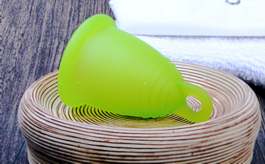
Now I use the Luna cup, made in Germany. In my research it had the best reviews. Mainly because people find it much softer and easier to insert than some others.
Challenges
- Finding what worked for me and my lifestyle.
- Having housemates around for the sterilisation process.
- Learnt to cold sterilise it in salt and water as they can get quite discoloured by the end. Hot sterilise it in vinegar, bicarb and water. Before and after period. 10 mins.
- I ensure I have wipes and a bottle of water so I can wash it in a toilet cubicle without a sink. For example at work, or a festival.
- I had to change my feelings towards my own blood and bodily processes.
Benefits
- No liners needed as it doesn’t leak for me.
- Less waste.
- Can’t say for sure if it has made things easier and lighter, as have also changed contraception, but my periods do seem to be better.
- Being able to talk to friends and support them in changing over.
Rebecca – uses pads
At Glastonbury festival 2010 I became involved in a discussion around the challenges of having your period at a festival. The Moon Cup was concluded as the best option. This was a totally new concept for me. I was a bit grossed out, as it was so different from what I was used to. But the thought lingered, especially the reduced environmental impact.
I decided to buy a Moon Cup in a high street chemist quite impulsively. It took a while to get used to. Then I became pregnant and didn’t need it for a while. Once I started researching cloth nappies I found out about other reusable period options that I hadn’t been aware of.
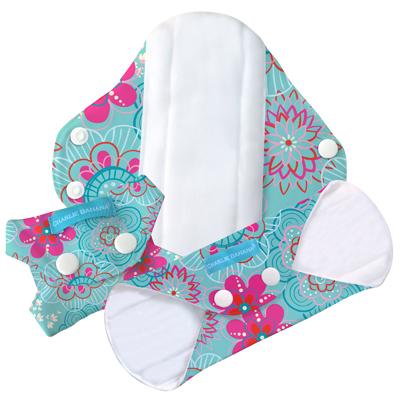
Using cloth sanitary pads (CSP) made sense to me. I certainly didn’t want to have the plastic, or bleached products near that area. My body told me what it wanted as I had an allergic skin reaction to disposable sanitary towels after child birth. I haven’t gone back to the Moon Cup as yet, but I will do for exercise and yoga sessions.
Recently I have tested a few different CSP brands as I found that some shapes fitted me better than others. Mine was purchased via Babi Pur . My favourites are;
Benefits
- Peace of mind of not having chemicals leaching into my body.
- Knowing what is in the product. I was shocked to discover not all the ingredients have to be listed for disposables.
- My periods seem to be shorter and less heavy.
- I feel my periods are less painful and uncomfortable.
Challenges
- The Moon Cup can be hard to get the fit right, I had to persevere.
- With cloth pads I had to try a few kinds to get the right fit.
- With cloth pads I have to think a bit more about choosing what to wear.
- I have to remember to take a wet bag out for on the go changes.
Tania – uses period pants
I heard about reusables, specifically the Moon Cup about 15 years ago when I started using tampons. This wasn’t followed up on it as I wasn’t ready for reusables. Then I started hearing more about it in 2014 when I began my low-waste exploration.
For 10 years, I’d used Natracare for their no-plastic products. Then for a few years after that, I struggled with a hormonal condition – sometimes I would bleed every month for 6 months and then not bleed again for an entire year. Carrying unused pads and tampons around in my bag for a long time sometimes meant the wrappers came undone and they became unsanitary. Natracare, because they’re made with plant-based material, also start to disintegrate after a while (I had stocked up to go live in India for a while, the heat didn’t do it wonders either).
Switching to reusables meant that I could just wash these items if they picked up fluff in my bag. When my condition was finally treated, I stayed with reusables for environmental reasons. Single use plastic and disposables is something I hate, and am blessed with a fair amount of eco anxiety which spurs me to action and advocacy.
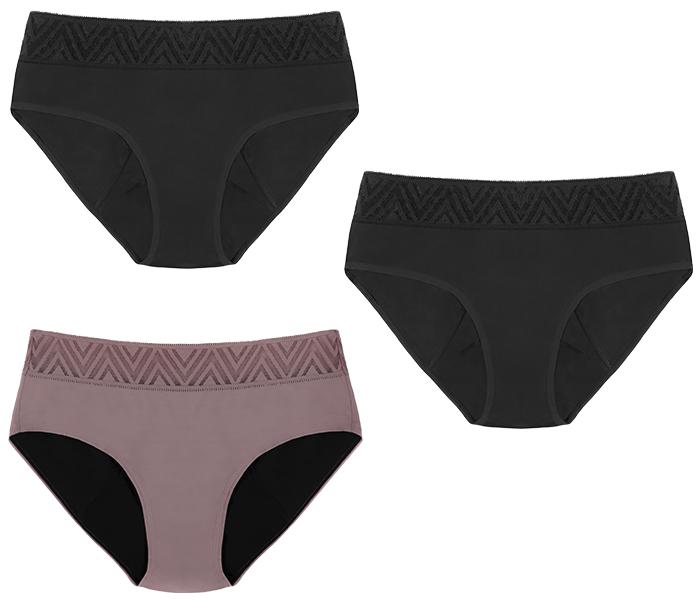
The types of period products I have tried are; menstrual underwear, reusable pads and menstrual cups. I started off with the underwear because I’d read about Thinx a few years ago, and got sent a sample to test. Finding these were great for light-medium days but not great for heavy days. Then I purchased a few reusable pads as boosters, and used them a couple of times before my random periods lightened up again. After that, I gave up on reusable pads (too fiddly), tried the cup and I’ve now been using that and underwear for two years.
The cup with the period underwear works best for me on heavier days. Emptying it about 2-3 times. I don’t sleep with the cup in though so for nights and lighter days, I usually just wear the underwear. One pair can last me a day on light days. I have 3 pairs of underwear that I cycle through.
Challenges
- If you use cups, you are forced to get comfortable with your lady bits and menstrual blood. It’s disconcerting and empowering at the same time.
- If you use underwear, you are also forced to get comfortable with menstrual blood as you will need to rinse the pants out.
Tips
- Invest in a good wet bag that you can carry your used items home in.
- If using cups, make sure you wash your hands before you change it.
- Look after underwear well by cold rinsing and soaking, then throwing in a cold wash with the rest of your laundry and air drying – no dryers!!
- What works for one person may not work for you, every woman’s flow is unique and individual.
- You may need to try different options before you find the one that works best for you, so be prepared for leaks and inconvenience in the meantime.
- Speak to people and seek many opinions but do what is right for you.
We have been so programmed by society to think of menstruation as “unclean” or taboo but there is something really powerful about this very natural cycle our bodies go through – it is literally life-giving. Switching to reusables has helped me reconnect to that.
Y – uses a cup
I have been using a Moon Cup since the end of 2016. I had been thinking for a while about using something reusable. Before this I had switched to using natural disposable tampons made from organic cotton. I wanted to switch to reusable as I was going travelling for a year, mostly in tropical climates. Looking for something that I could wear all day without having to worry about changing it. Also I wanted something that didn’t hold old blood near a semi permeable membrane inside my body, as tampons do, as this increases the risk of toxic shock syndrome.
My periods at the time were very irregular so I didn’t know when it was going to appear. I had also stopped taking the contraception pill to be more natural. This meant I couldn’t use artificial hormones to control my cycle. I therefore needed to be able to have something small I could carry with me all the time.
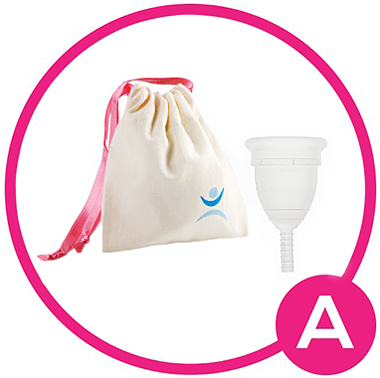
Period pants, or washable pads, wouldn’t have worked in such hot countries while travelling with limited washing facilities. Internal options seemed best for me. The Moon Cup appealed as comes in different sizes. I know from my smear tests that I am quite small inside. I have found that the Moon Cup does leak a tiny bit for me. This is easily fixed with some washable cotton panty liners. They have simple poppers to hold them in place.
I have since this I met Mandy from the Cup Effect. They promote cups as an option here in the UK and abroad. They also offer a cup party service! She has explained to me that the most common reasons for leakage are human error or because the women hasn’t found the right cup for her body shape.
Little Green Duckie – uses pads
I switched to washable pads, or Cloth Sanitary Pads (CSP), a few years ago. I hadn’t been comfortable morally, or physically, with the plastic pads for quite a while. But I didn’t know there were other options. I used the organic cotton Naturacare pads for a while, although I felt they were better for my body they were still going into landfill / incineration.
Currently I use mostly House of Callaway pads. I like that they are hand made by a really small Welsh business. The designs are fun and come in different sizes. Compared with the monthly outlay of disposables House of Callaway estimate you recoup the cost of reusables in around three years.

When I am at home I put the used pads in a draw in the bathroom with a piece of muslin over the top, this allows them to breathe and dry out naturally. There is no need to wash straight away, although you can. The pad company sent me full washing instructions, and have them on their website. Some companies instructions can vary depending on the composition of the pad. I did a bit of trial and error to find what worked for me.
If I am going to be away overnight I take a small water proof wash bag, and bring the pad home for washing as normal. The issue of being away for a while with reusable pads does not come up. Being on The Pill means I just take consecutive packs to ensure I don’t have period whilst on a long holiday. It is safe for most people to take three packs in a row without a break. Do check with your practice nurse if this would be OK for you.
Why I like them
- I know I am not contributing to landfill, or incineration.
- There is no plastic for my body to react with, or absorb chemicals from.
- I find them more comfortable than disposables.
- For me there is less night time leaking (or the worry of), this means a better nights sleep.
- I subjectively feel that my periods have been lighter and less painful since swapping.
What you can do
- If you currently use reusable products, talk to your friends about them. Breaking down social taboos and normalising these products is more important than you might think.
- Share this post with your friends.
- Speak to younger family members about the range of options available. Most of these options are not mentioned in schools.
- City to Sea have put together a great guide with commonly asked questions.
- If you are curious about switching but have other questions, get in contact. I’ll try and point you in the right direction or person.
Period Cup Recycling
The menstrual cup brand Ruby Cup are now offering a cup recycling programme for any brand of cup that has got to the end of it’s life, or is not suitable.


4 Comments
Reusable Sanitary Pads
Thank you do much for this us woman should be definitely looking into more using reusable products and would save us a lot of money!
Sustainable Responsible Living
Great post and important topic, and indeed bit off an iffy one. #goinggreen
Becca @ The Earthling's Handbook
Alice may be working harder than necessary to sanitize her cup–it’s been my experience (over more than 20 years of cup use) that washing with soap and rinsing thoroughly in hot water is really all that’s necessary. But women with recurring yeast infections may need to sterilize it.
Thanks for spreading the word!
https://articles.earthlingshandbook.org/2009/06/30/menstrual-cup-mania/
Rosie - greenrosielife
Brilliant post that I will share widely. I’m ashamed to say I used conventional tampons and wish wholeheartedly I had not. I couldn’t get on with pads and somehow a cup scared me. Definitely more people need to talk about periods because how most women deal with them currently is unsustainable and women cannot carry on as I did #GoingGrreen