
I got sent a link to the Big Compost Experiment in 2021, and was very excited to take part.
The Big Compost Experiment is a 4 year citizen science project about citizen opinions and behaviours towards home compostable plastics, and the performance of these packaging types in home composters across the UK. The experiment ran from November 2019 to August 2023.
My Big Compost Experiment
I had to choose some packaging that was certified as home compostable. I chose a bag that came with produce from the food delivery company (Farm Drop) we were using at the time.
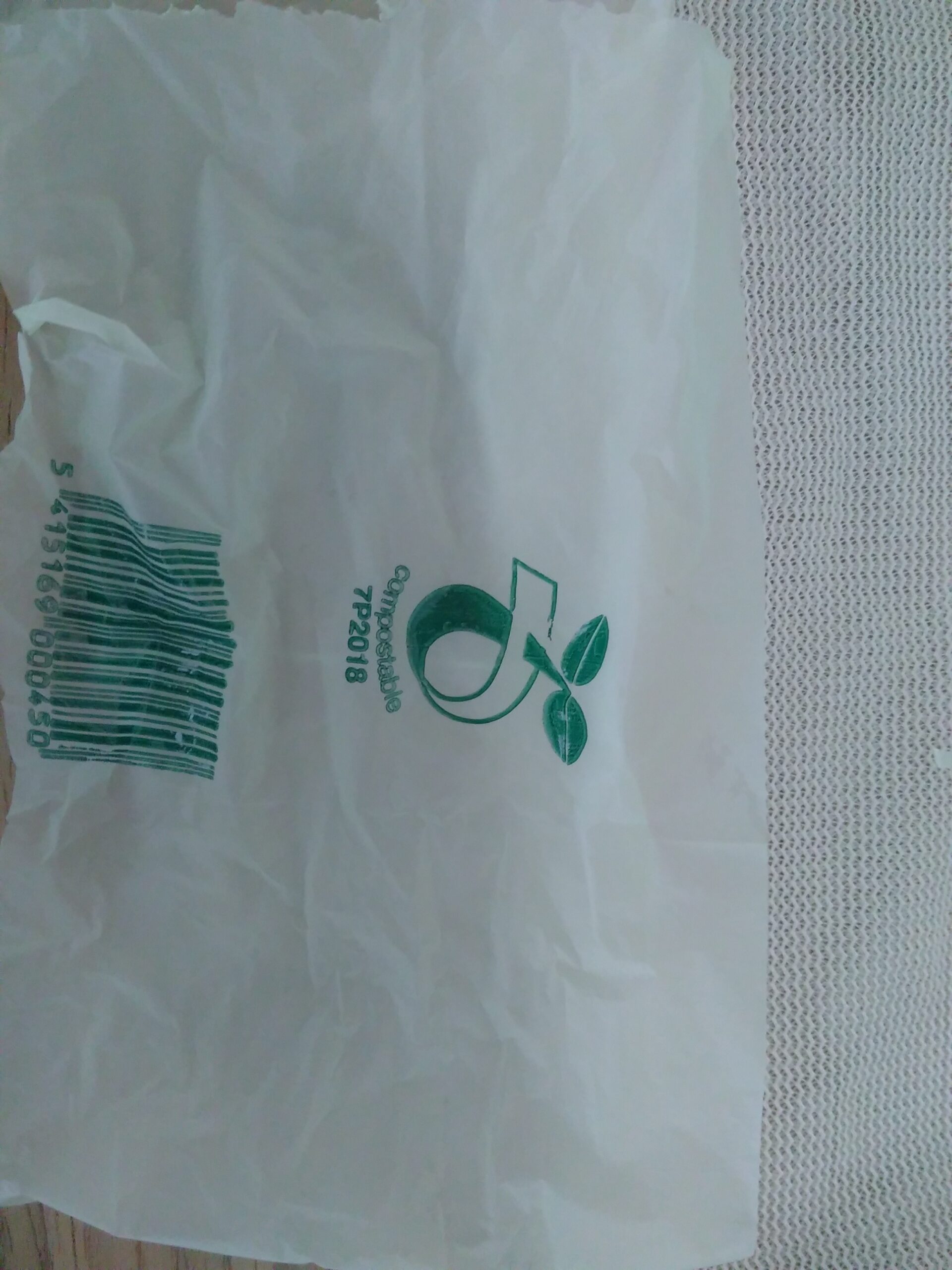
It had to be cut up, and placed in a net bag with a plastic bottle top. This was used to label what kind of item was in the bag. If I had more than one bag in the composter I would know which was which!

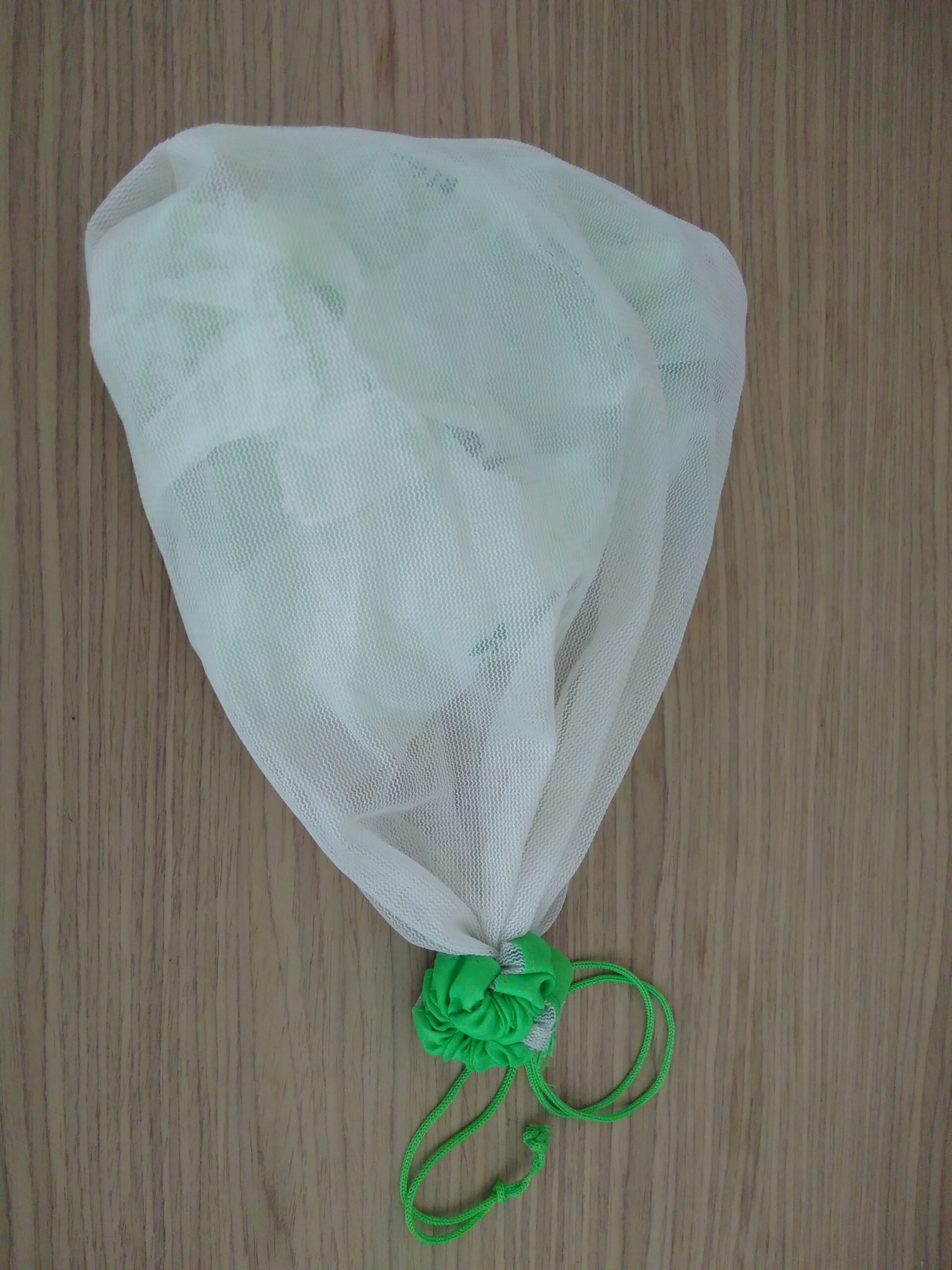
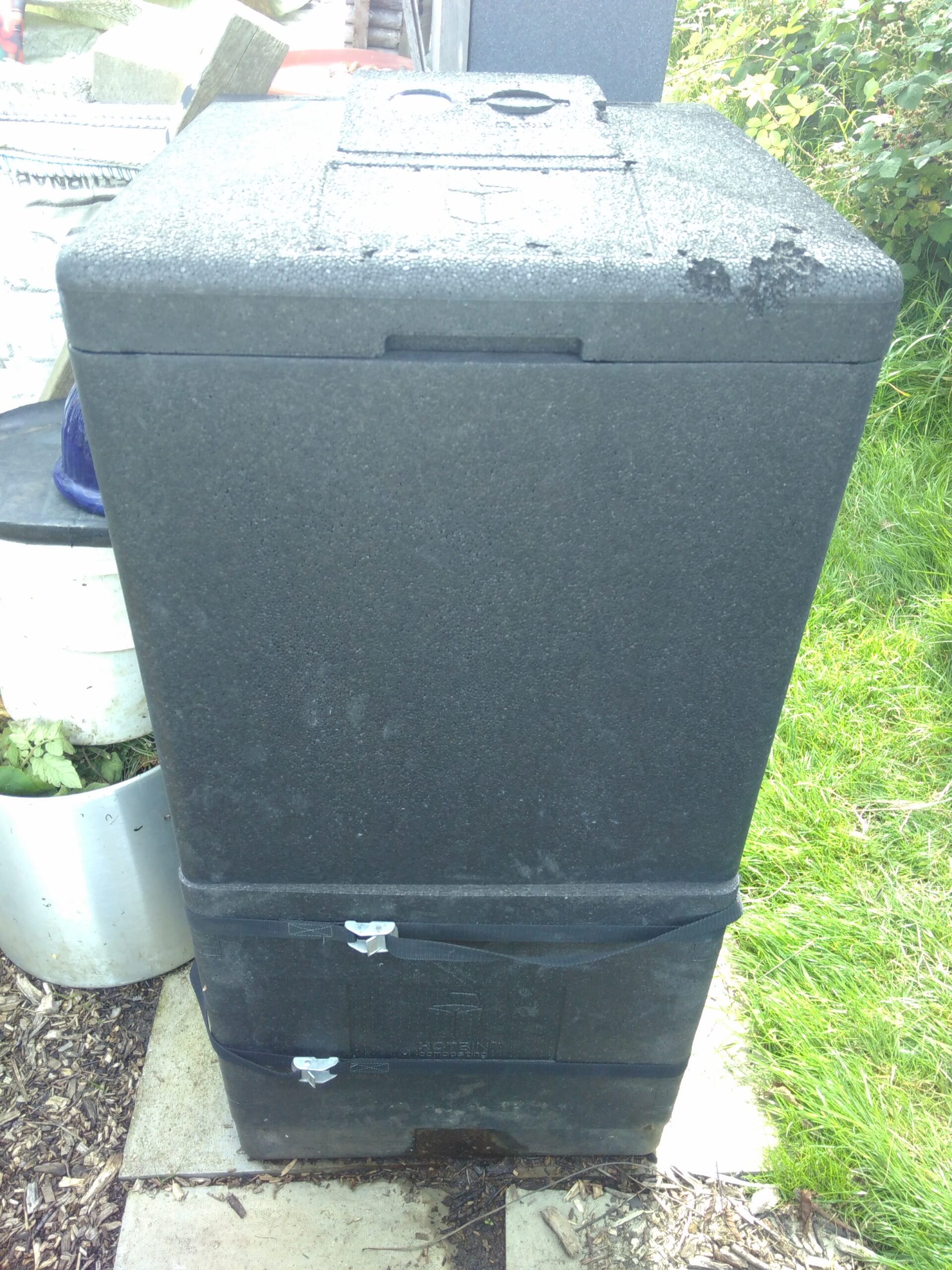
This was placed in my allotment “hot composter” in August 2021. All of the photos, and details of the item, were uploaded to the Big Compost Experiment website.
It came out the other end in September 2022. It was interesting to see how long things take to travel through my hot composter process.
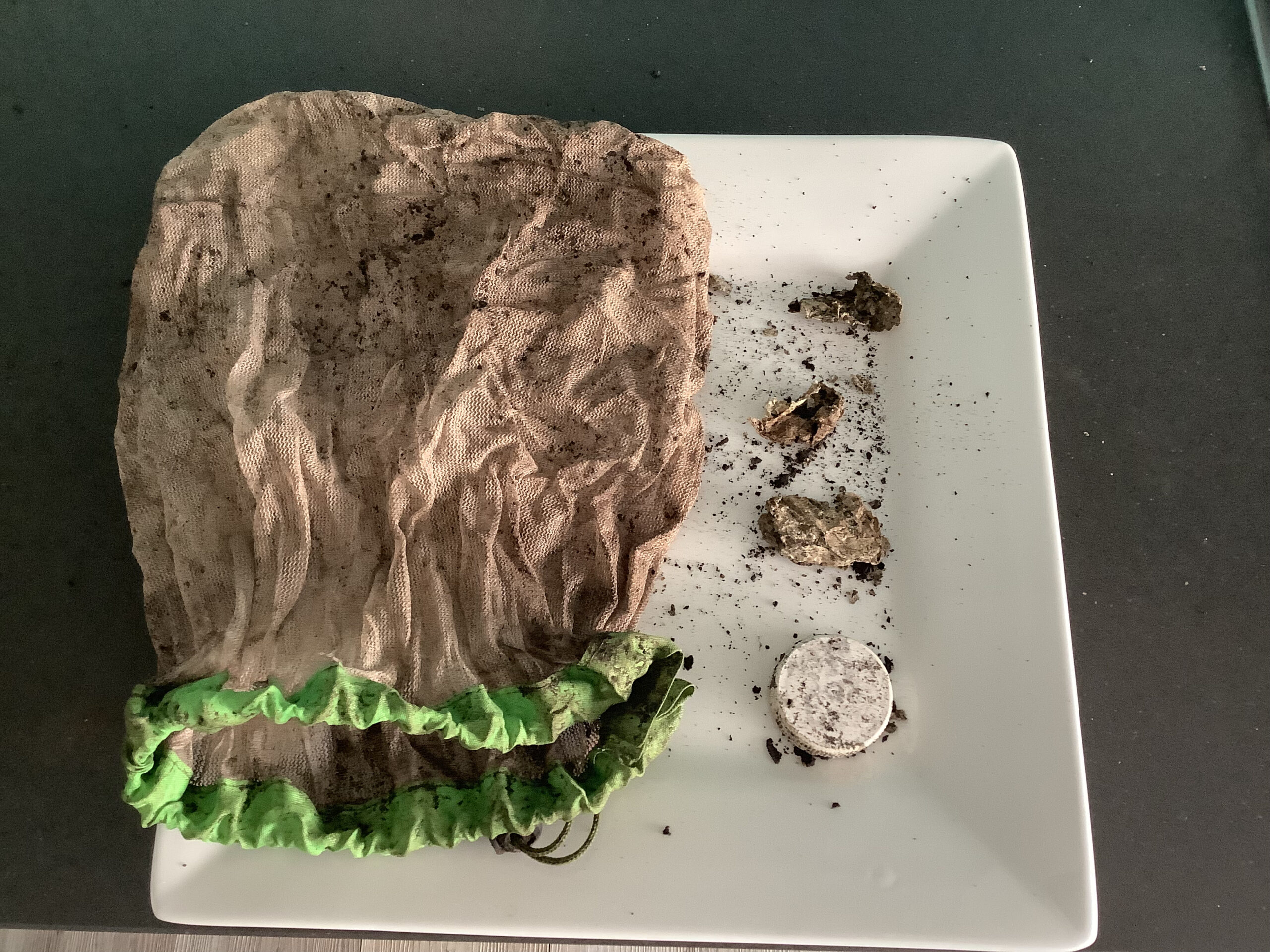
As you can see above the compostable bag had almost completely disintegrated in the way that it should. These results were also uploaded to the experiment website.
The UCL Compost Experiment Results
This is the abstract from the experiments journal article. I have reproduced it in full as I think it is extremely interesting.
“Compostable and biodegradable plastics are growing in popularity but their environmental credentials need to be more fully assessed to determine how they can be a part of the solution to the plastic waste crisis.
We present results and analysis on home compostable packaging. This type of packaging requires the citizen to be able to correctly identify the packaging as “home compostable,” to have composting facilities at home, and to successfully compost the plastic.
Using a citizen science approach, we engaged with 9,701 UK citizens geographically spread across the UK to examine their capability, opportunity, and motivation to do this. Of this cohort 1,648 citizens performed home compost experiments to test the environmental performance of compostable plastics.
We report on the type of plastics they tested and their disintegration under real home composting conditions.
The results show that the public are confused about the meaning of the labels of compostable and biodegradable plastics. 14% of sampled plastic packaging items tested were certified “industrial compostable” only and 46% had no compostable certification.
Of the biodegradable and compostable plastics tested under different home composting conditions, the majority did not fully disintegrate, including 60% of those that were certified “home compostable.”
We conclude that for both of these reasons, home composting is not an effective or environmentally beneficial waste processing method for biodegradable or compostable packaging in the UK.”
You can read the full journal article here.
My thoughts
I am not surprised that people didn’t know the difference between home compostable, and bio degradable (eg industrially compostable), items. The public education on this is severely lacking. There are multiple certifications and logos, adding to the confusion. Plus a lot of greenwashing.
The really shocking thing is that 60% of those items that were certified as home compostable did not disintegrate as they should! A likely explanation is that home composters in the real word do not “perform” in the same way as a controlled “home composting” simulation used to test these items. They are unlikely to get as hot, for as long.
I find that home compostable plastic can take a while to degrade. So, it may be that if those items had gone through the process for a second time they would have disintegrated. Of course there are many “natural items” that take a very long time to disintegrate eg avocado skins, fruit stones, egg shells, sticks.
So, if you are sorting your compost, and you find half disintegrated compostable plastics, just put them back in with other “not quite ready” items, and sent them around again!
A new compost experiment
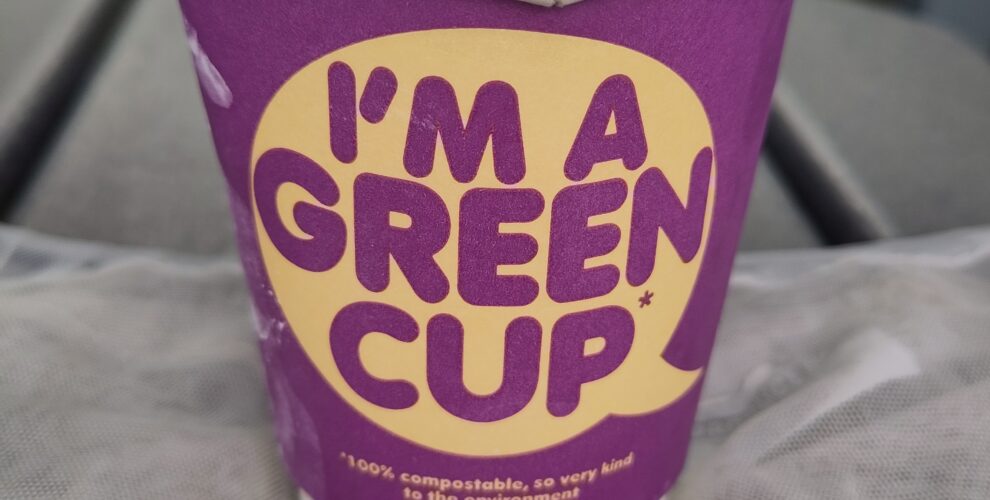
I have a new composting system on my balcony, a tumbling barrel composter. This is a much shorter process than the hot composter. We use our reusable hot drink cups while out and about. However, at a recent festival I was curious to see if the single hot drink cups they were using were as home compostable as stated.
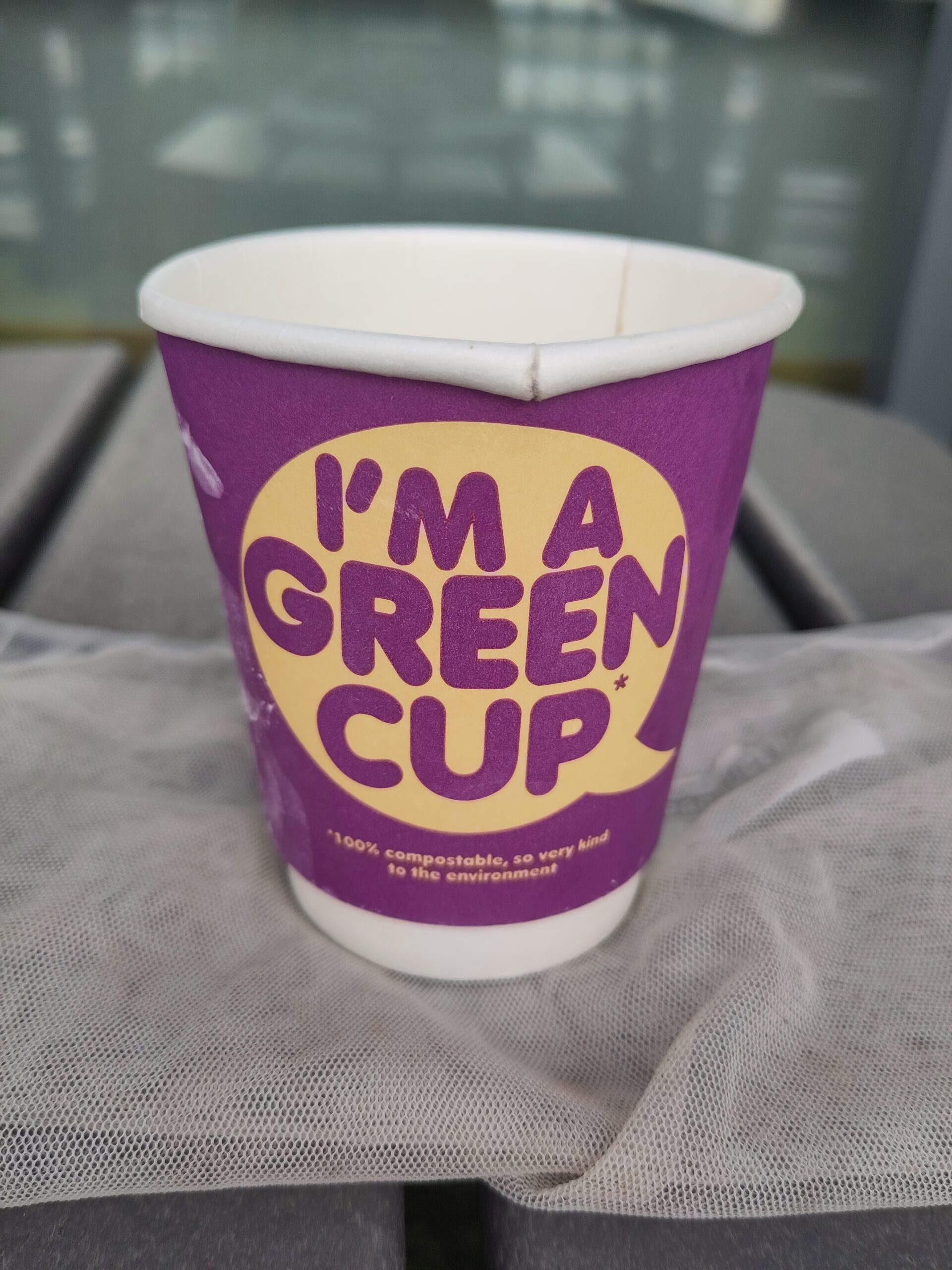
The issue with hot drink cups is they tend to need a plastic liner to stop the hot drinks seeping out before you are finished. This one states “100% compostable so very kind to the environment”. But it does not state “home” compostable or have any of the certification logos. So I was want to see what will happen.
Of course the resources to create, and transport, the item are also a consideration. Especially when this is a single use item, and can be avoided if people use their own cups! But thats another discussion.
The Cup Experiment
I cut the cup up and placed it in a net bag. This is so it will be easily found and identified at the end. This is the same process required by the UCL experiment.
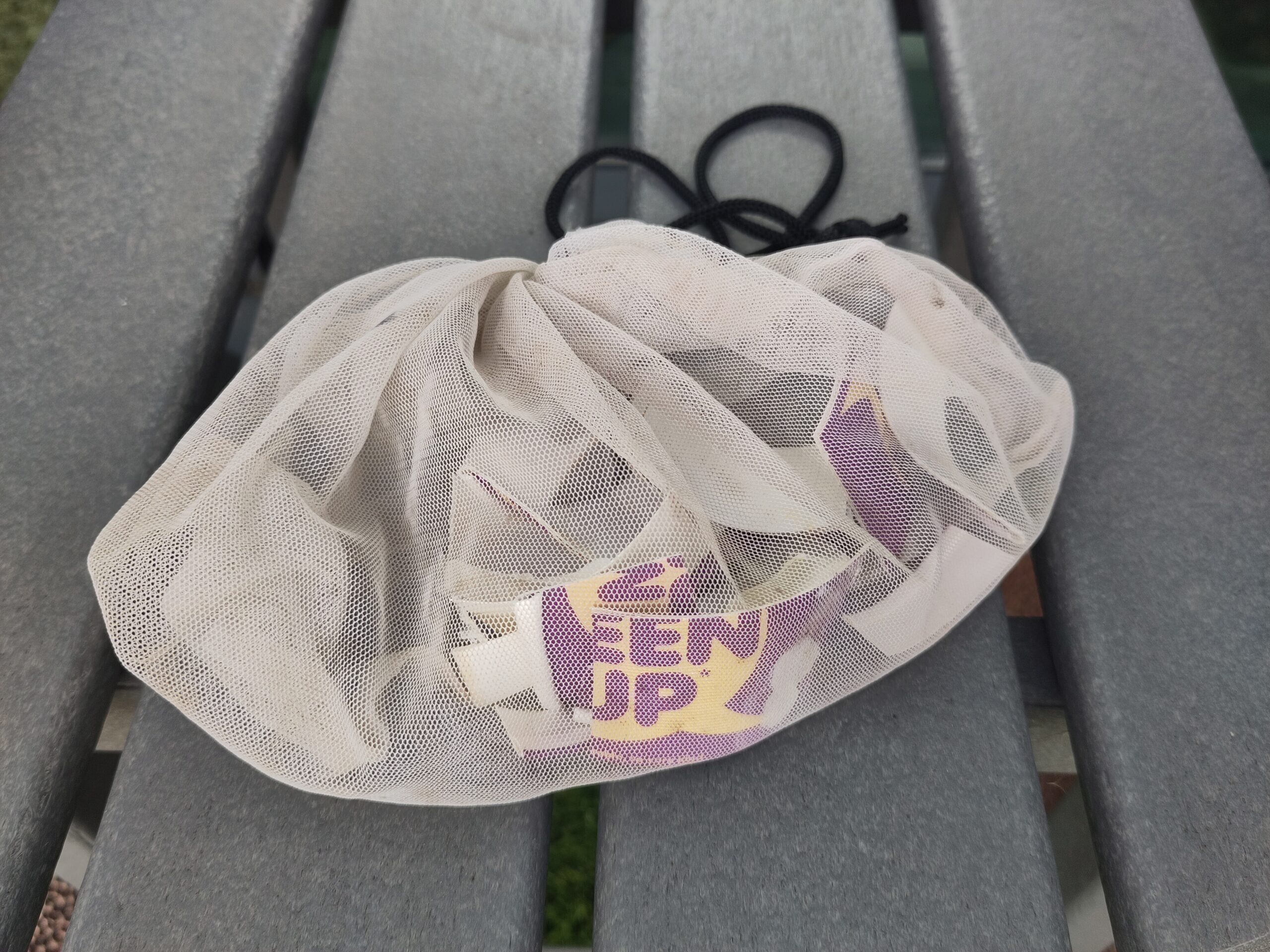
I placed it in my tumbling composter on 8th September 2023. At the time the composter was almost full. It will be sorted 6 weeks after this point.
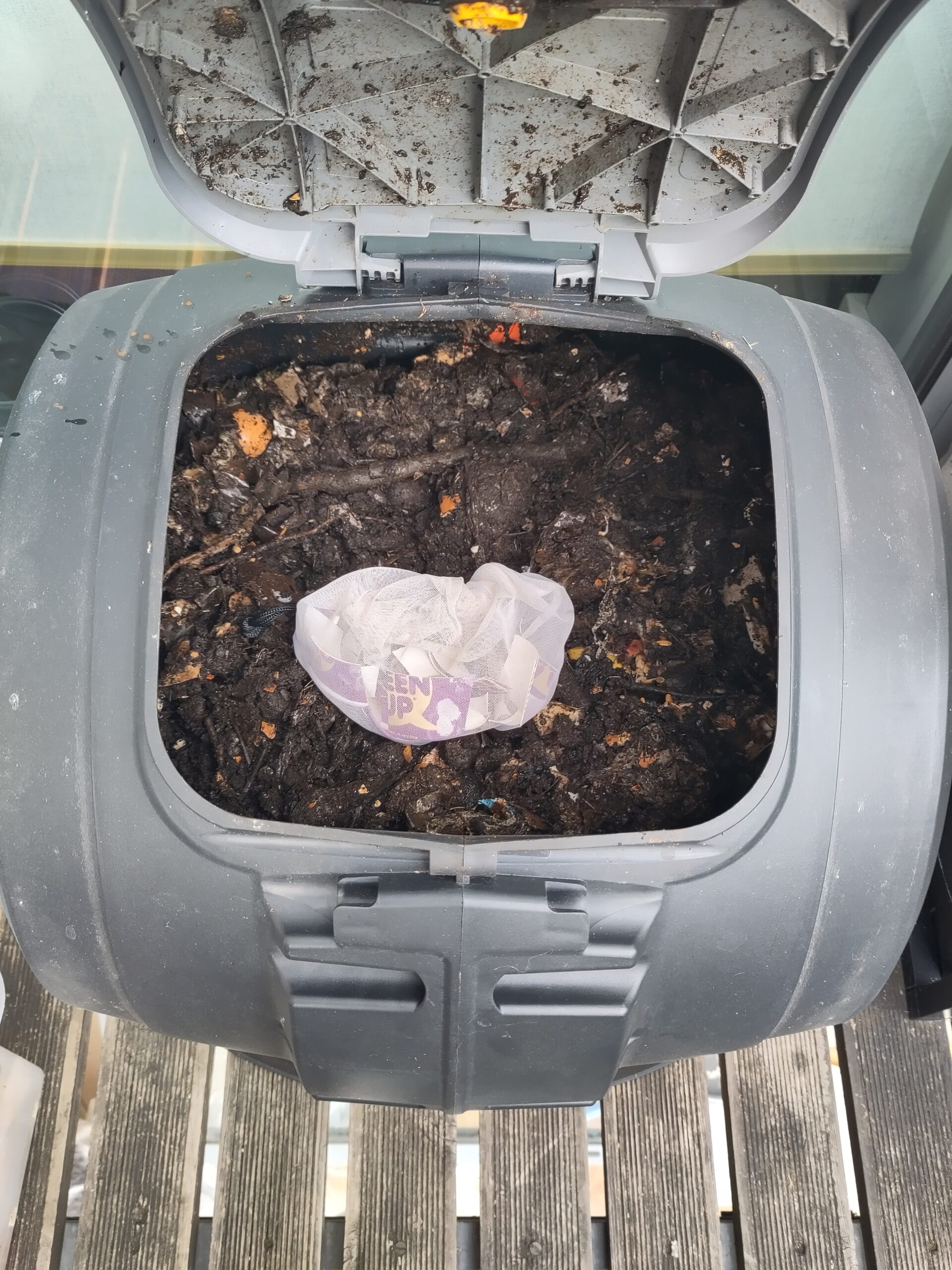
I will report back as to how the cup comes out. Will it full disintegrated, or does it need to go around again??
Do you have experiences of home compostable items in your composting system? Do share below.


0 Comments