

The dilemma
Is decaffeinated coffee a sensible to drink for the conscious and ethical consumer? Does it really contain chemicals that are in nail varnish remover, and dry cleaning fluid? Let’s find out…
Background
Raw green coffee beans are decaffeinated before roasting, through the use of solvents , carbon dioxide or water. Typical solvants include those used in refrigeration and paint stripper.
Decaffeinated coffee contains most of the antioxidants and flavour of the full version, but 97-99% less of the caffeine. Some individuals can be hyper-sensitive to caffeine, and it is widely agreed not to be suitable for pregnant women in large amounts.
Due to variations in the caffeine content of the original beans your decaf can contain a differing amounts of caffeine milligrams. If you want to avoid caffeine all together, having naturally caffeine-free hot beverages is your best option.

Coffee contains around 1,000 different chemical compounds that contribute to its taste and aroma. Therefore just removing the caffeine, without taking out too much else, is a chemistry challenge. It is likely that some residue of the chemicals used to decaffeinate remain in the coffee bean. Coffee used to be decaffeinated (circa 1903) with Benzene. This was stopped, as it was found to be a human carcinogen.
Different processes
Direct Process
Many mainstream brands previously used the “direct process” method with chemicals Methyl Chloride or Dichloromethane (DCM). DCM is the least toxic of the simple chlorohydrocarbons, but it is not without health risks. It is metabolized by the body to carbon monoxide, and may be carcinogenic. Research is not yet clear as to what levels may be hazardous to health. In pregnancy DCM has been shown to cross the placenta. The concern over health risks with DCM means it is being used less and less.
Water Process
The “water process” uses just water, but of course this creates issues of water waste. Especially if processing occurs in an area of water scarcity. Hot water extracts both flavour ingredients, and caffeine, from green coffee beans. If the extract is passed through activated charcoal, most of the caffeine is removed. Soaking the original beans in the decaffeinated extract then restores most of their flavour.
Natural Process
The “natural process” uses the plant hormone ethyl acetate (found to be moderately toxic) or carbon dioxide. Carbon dioxide is forced through green coffee beans. Its gas like behaviour allows it to penetrate deep into the beans, and dissolves 97-99% of the caffeine present. Coffee manufacturers recover the caffeine and resell it for use in soft drinks and medicines.
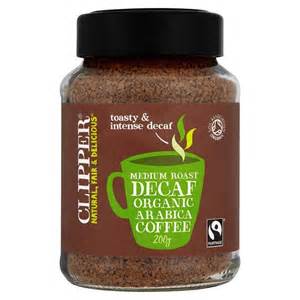
The CO2 method has been approved by the Soil Association. If your coffee has the Soil Association logo you can be sure this method, has been used. An example of this would be Clipper Coffee.
What are you favourite naturally caffeine free, or decaffeinated hot beverages? Mine is a fresh mint or fresh rosemary tea.



1 Comments
Penny
This information is eye-opening and would be new to the majority of coffee drinkers. In addition to organic/fair trade/sustainable certified brands, the type of decaffeination is something I’ll look for from now on.