
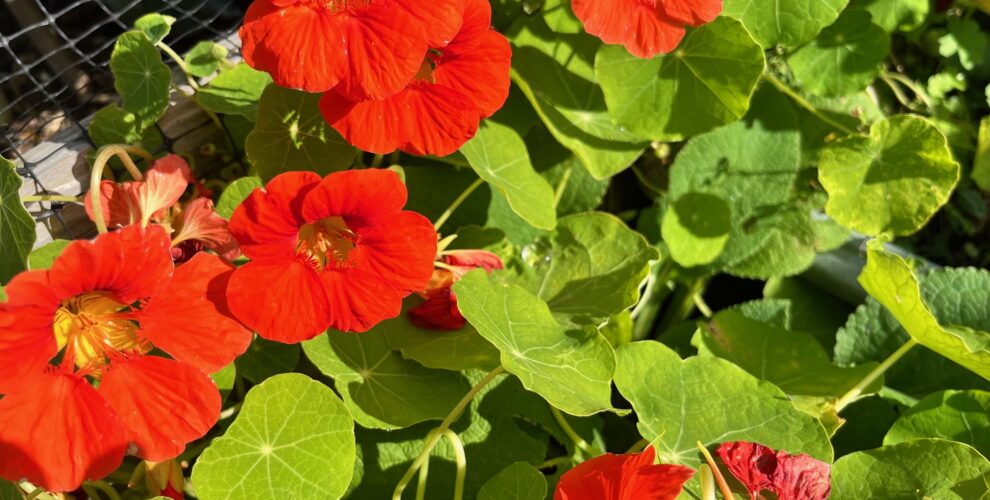
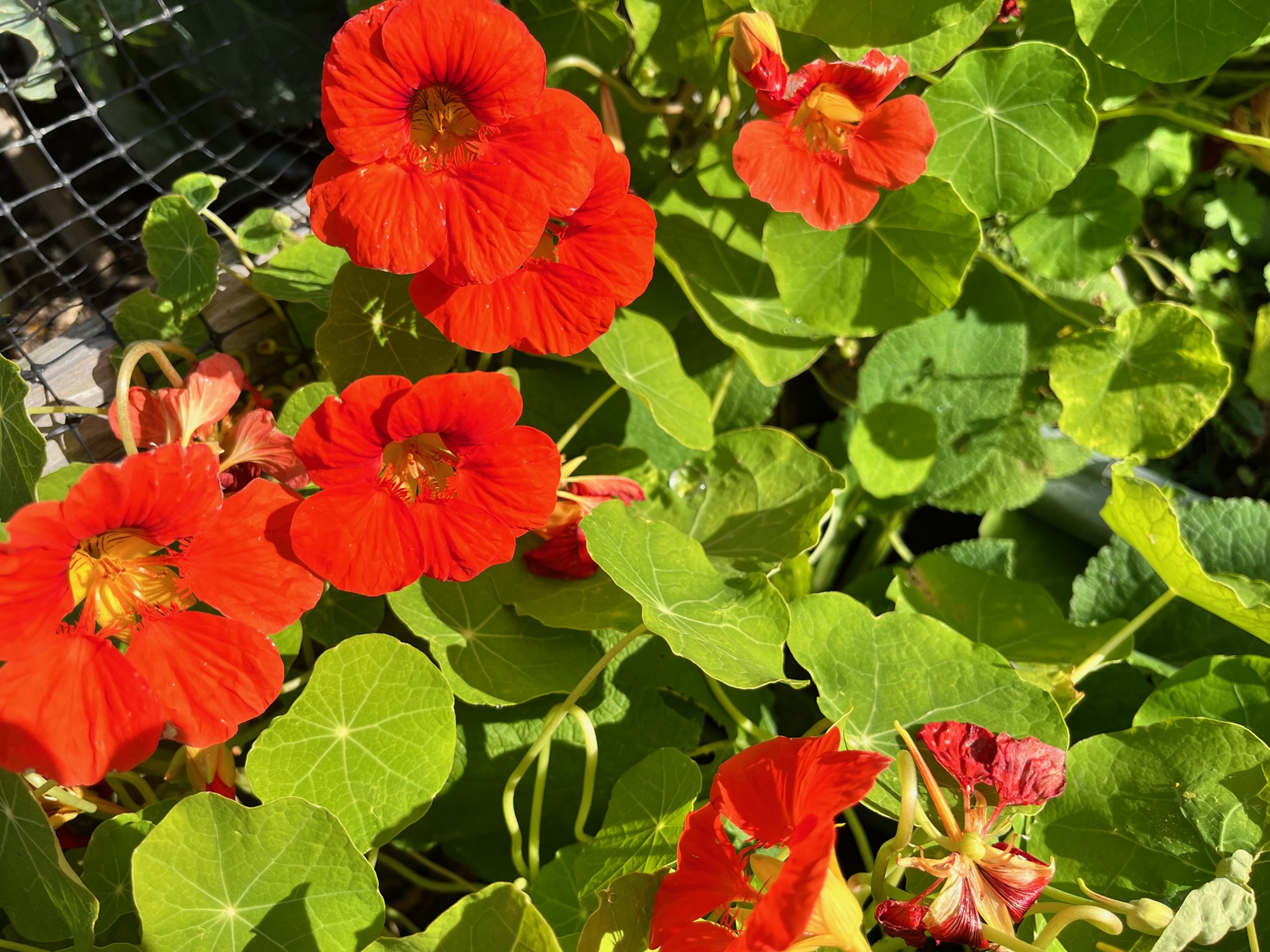
Nasturtiums are such a useful plant!
- Leaves, flowers and seeds are all edible.
- Great for pollinators, caterpillars, and small insects at the lower end of the food chain.
- Grows easily, good for children, and those new to growing.
- Good ground cover, protecting bare soil.
- Looks pretty!
- You only need to buy seeds once, as it self seeds.
- Seeds can be saved easily to share with neighbours.
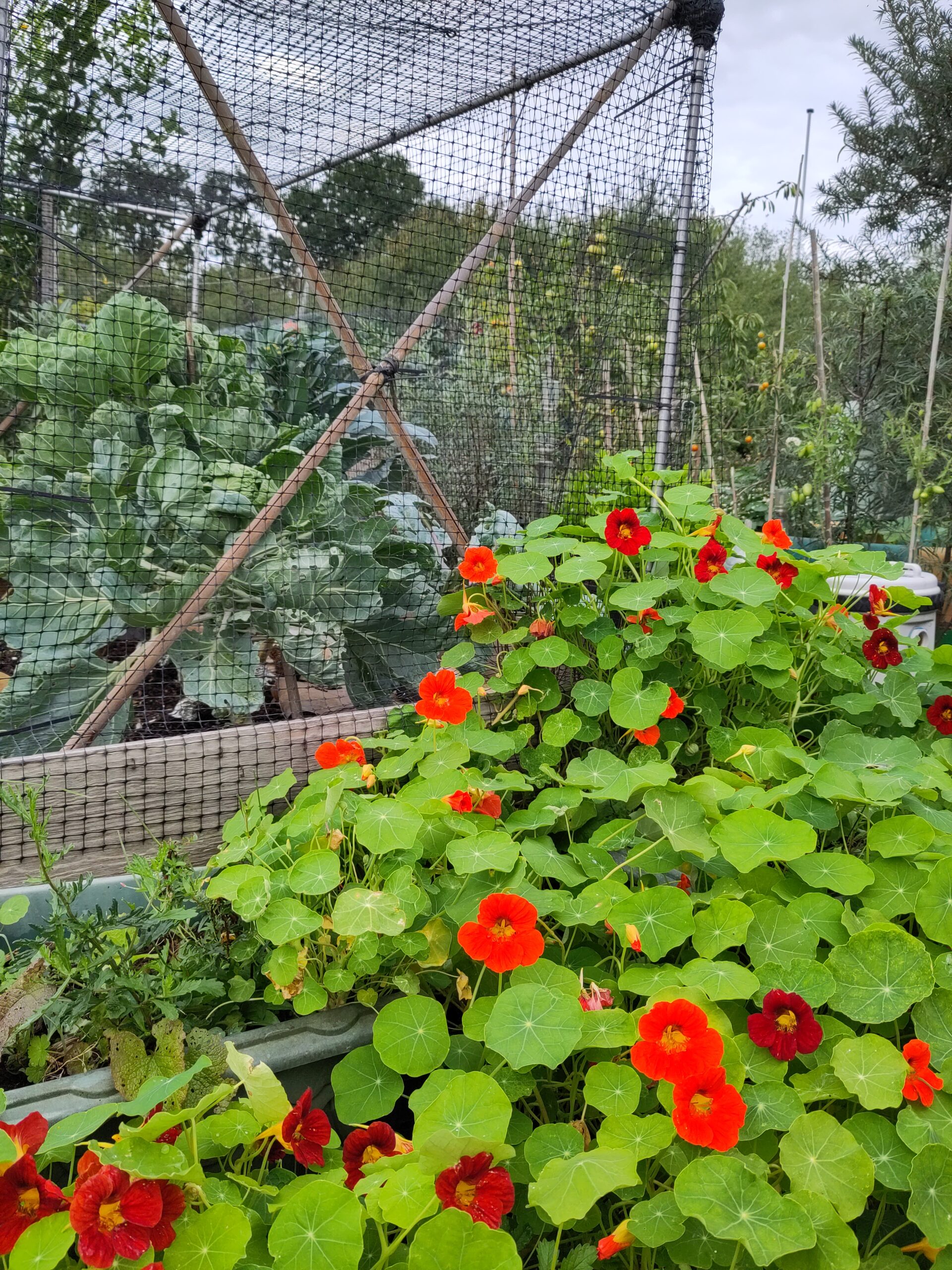
Nasturtiums make a great show of flowers.
Sacrificial Plant
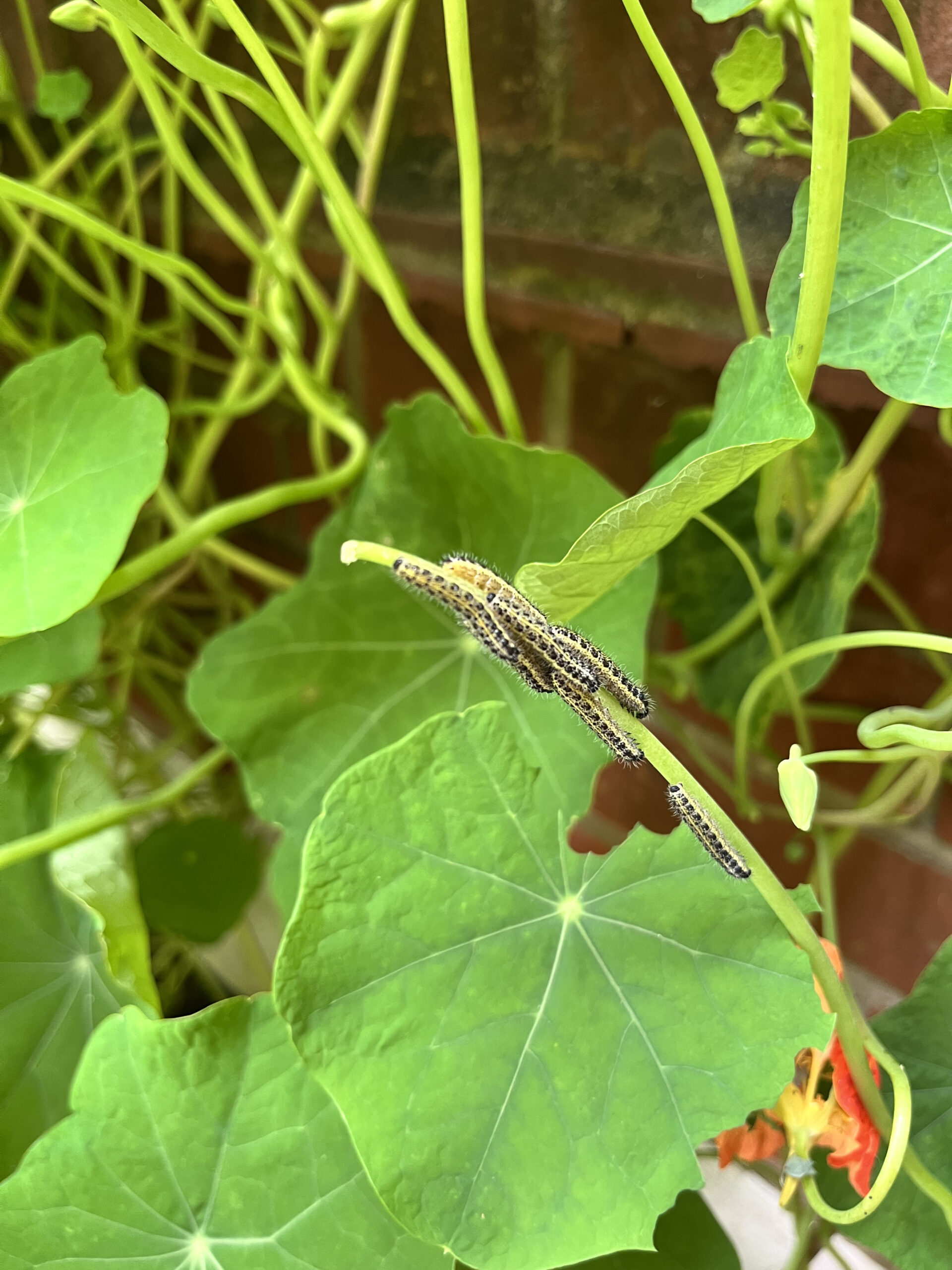
Caterpillars and black fly love nasturtiums. But this is fine! It is called a “sacrificial plant”, one which you expect to get partly eaten. They grow so fast and vigorously that it usually doesn’t matter. The caterpillars will turn into butterflies, a good thing. The black fly are a food source for ladybirds and other beneficial insects. Win Win.
Nasturtium vodka?
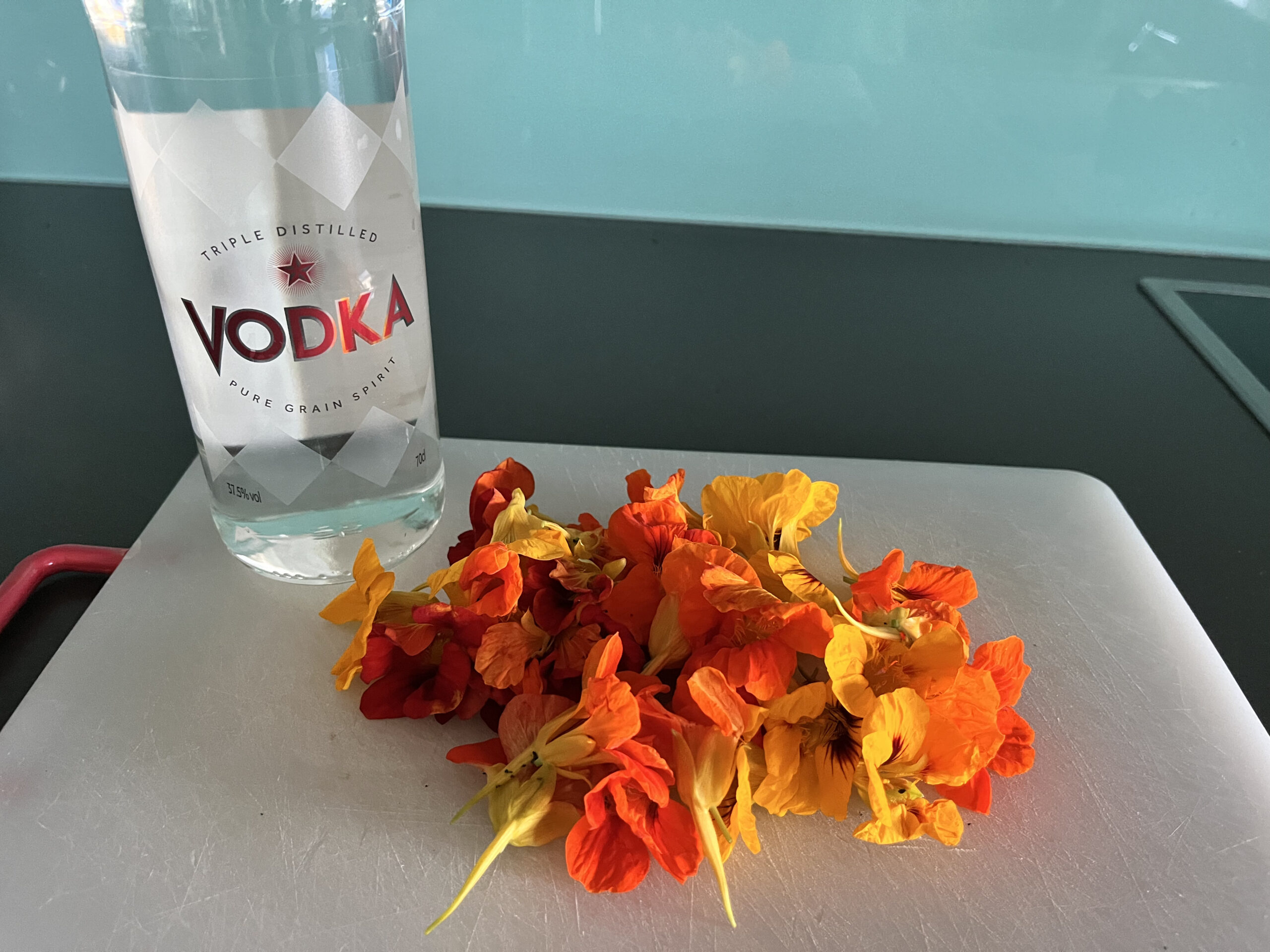
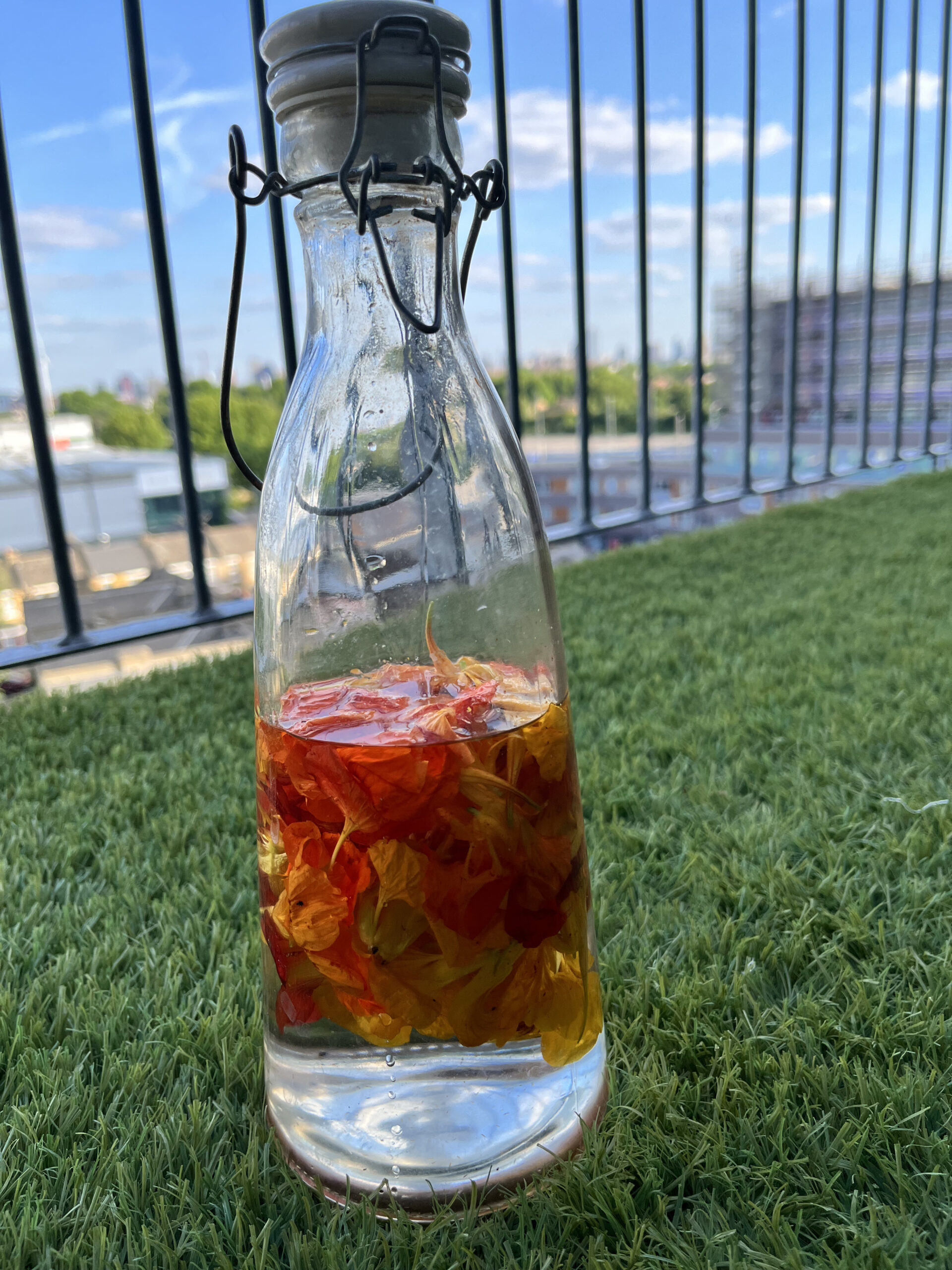
Pick 20-30 nasturtium flowers. Wash and check for insects! Combine with 500ml of vodka and leave for three months. Make sure you label it so you know how long it had been going. Makes a very peppery vodka perfect for a Bloody Mary.
Eating the leaves & flowers
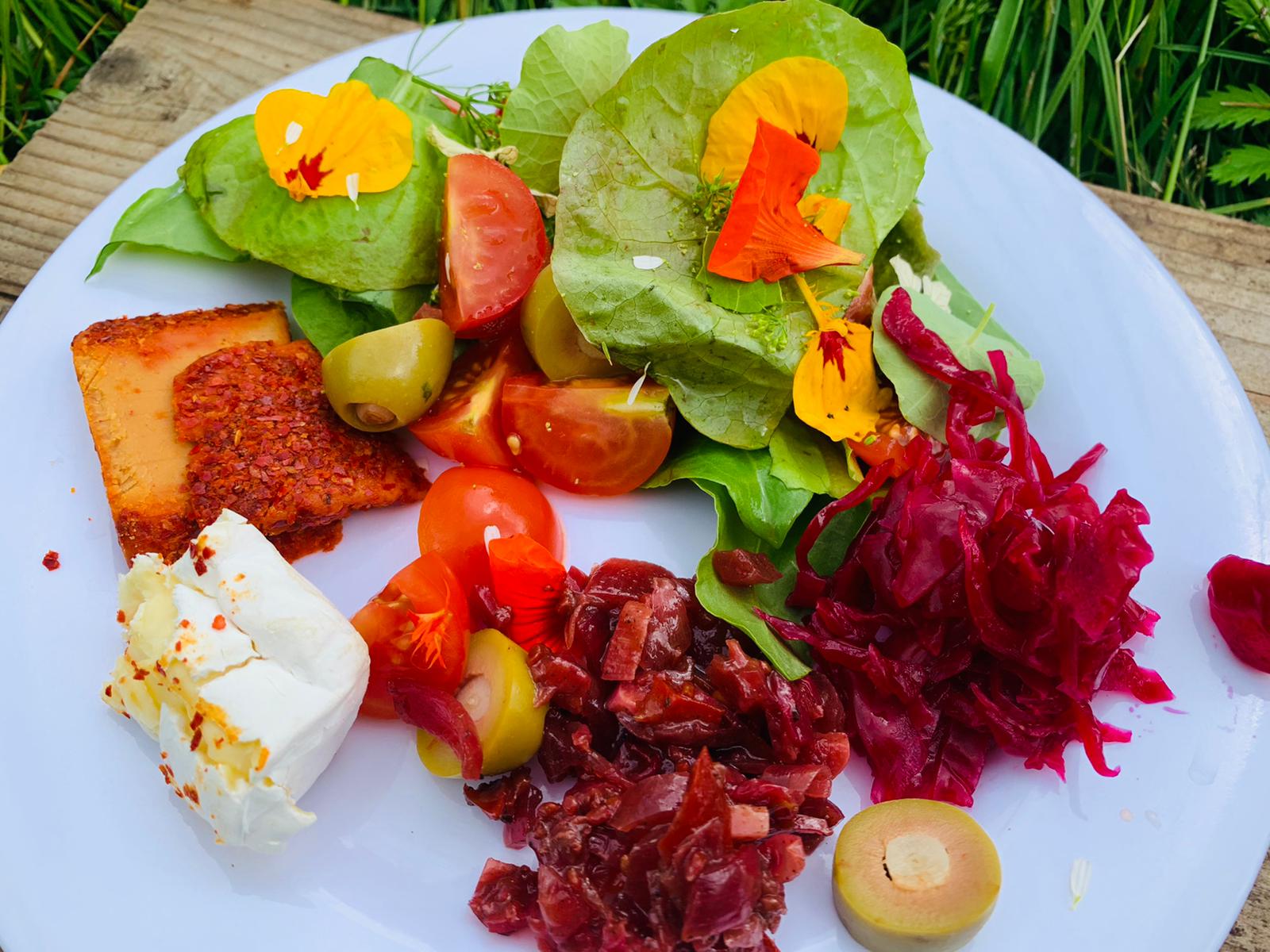
The leaves and flowers can be used in salads. Both are quite peppery, a bit like rocket. They also look pretty. The young leaves (smaller ones) are the most tender. The bigger ones can be a little tougher.
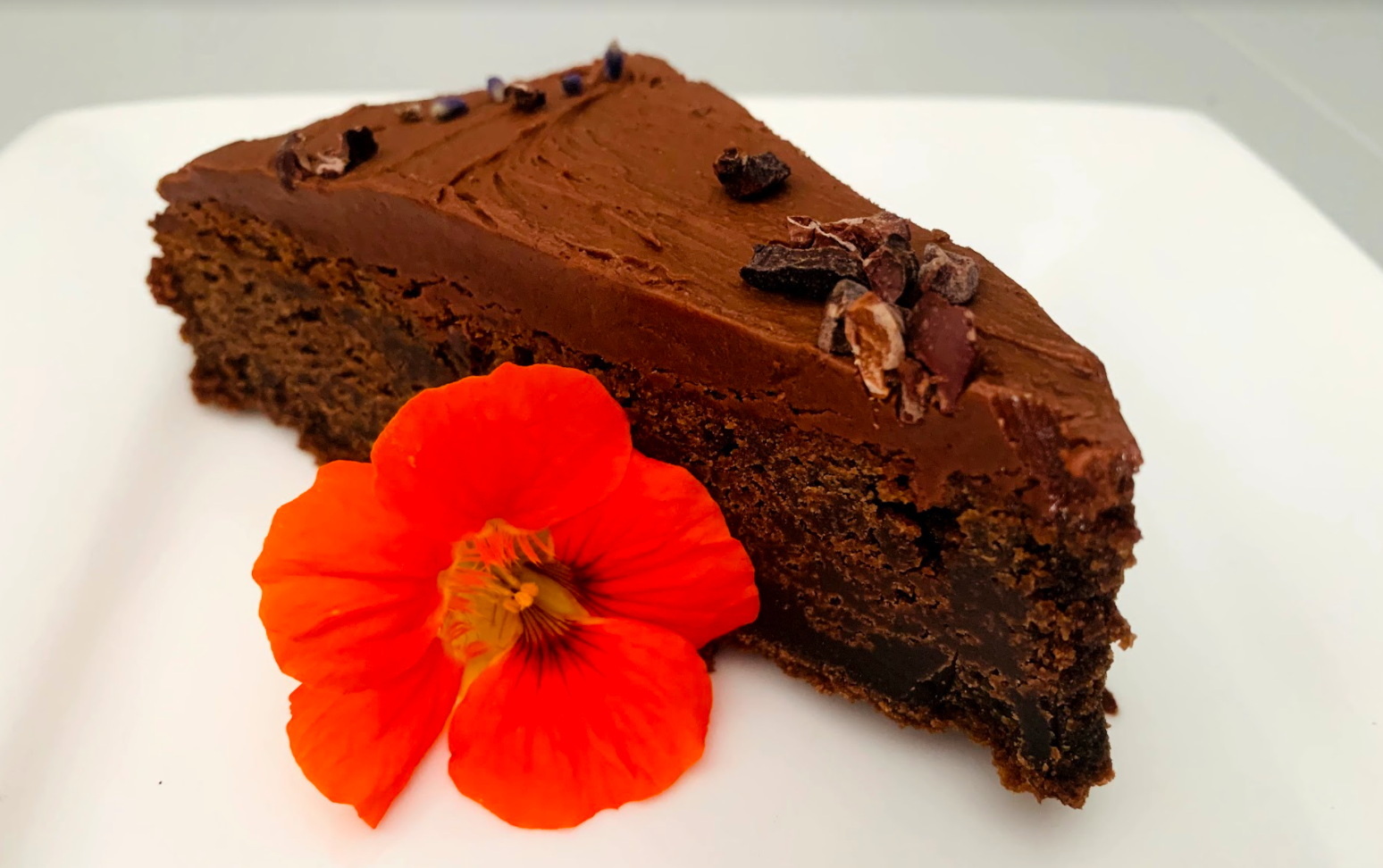
Or use as an edible decoration with a cake or other baked goods.
Don’t panic
This will happen when the frost comes!
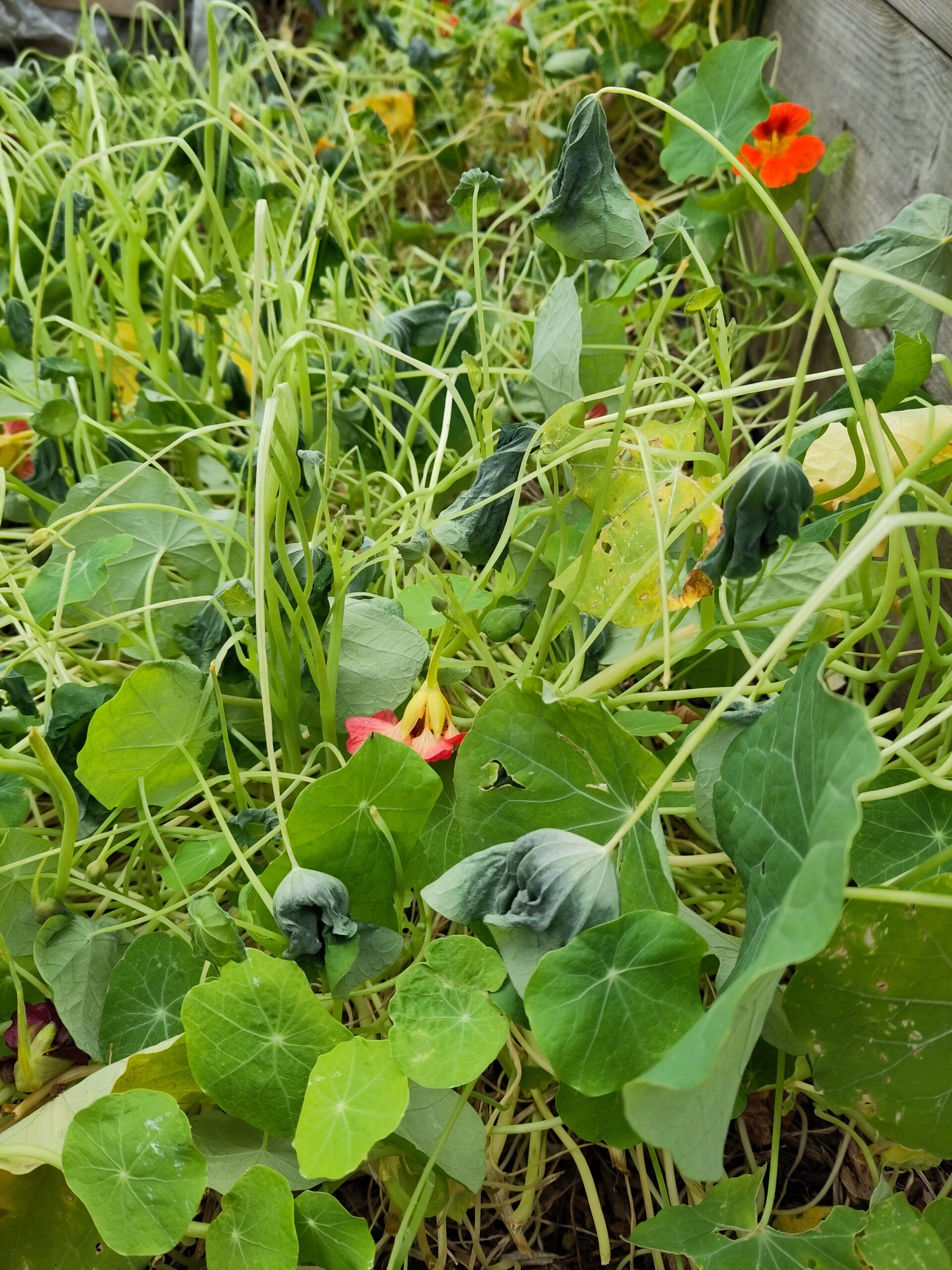
Some will have died but some will keep going a while longer. However this is when you know it’s certainly seed picking time. Although you may see seeds forming weeks before the first frost. They are much easier to see once some of the leaves are frost damaged.
Capering The Seeds
You don’t need to have a jars worth of seeds to start this process, you can start with what you have, and then add each week (or day), until the jar is full.
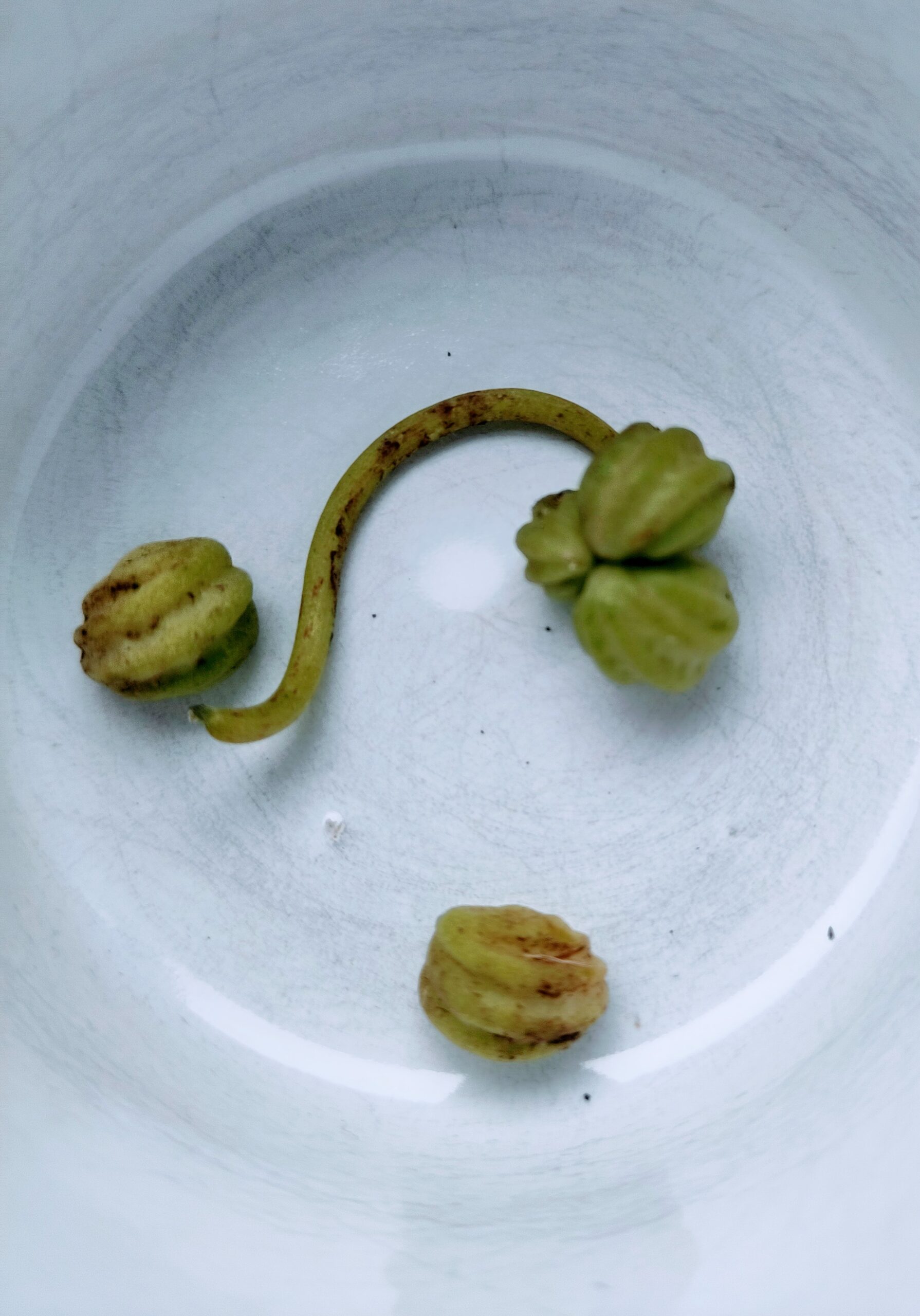
- Take a clean jar, fill two thirds full of apple cider vinegar. Put the vinegar into a saucepan.
- For this jar (below on the left) it was 200ml of apple cider vinegar, to which I added 1tsp salt, 5 peppercorns slightly crushed. Adjust your quantities if using a much bigger or smaller jar.
- Bring mixture to the boil to dissolve the salt.
- Meanwhile wash and check your nasturtium seeds. Remove any bits of stalk, flower etc. Separate any that are still attached together.
- Put the seeds in the jar and pour over the liquid, you don’t have to wait for it to cool. Place in fridge once the jar is cool enough.
- Keep adding seeds as you find them until the jar is full.
- Then wait three months for them to be ready.
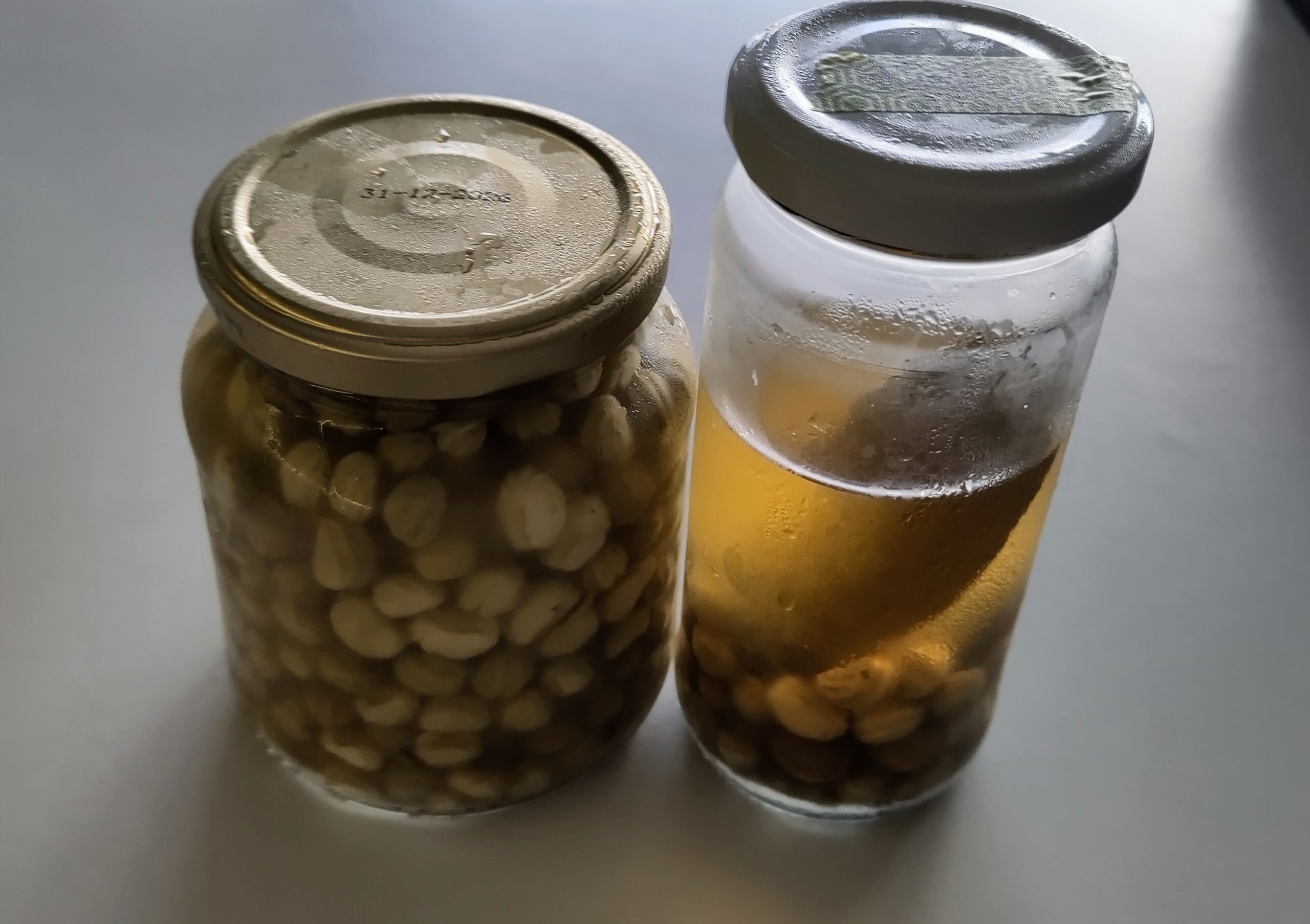
I suggest writing the date on the jar so you know when they will be ready! Now start your next jar.
Now I have been doing this for a while I always have a jar being filled, one “proving” and one that I am using.
Use in any recipe that asks for capers but also great added to most salads. They are bigger, juicer and more peppery than regular capers, whilst also being cheaper!


0 Comments