
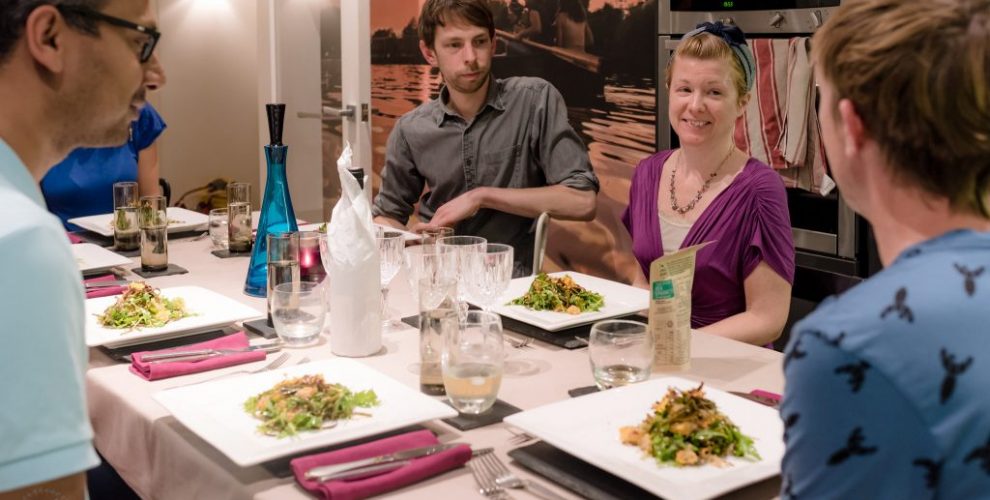
Why local vegetarian food?
Following our Local Food supper club a number of people requested a vegetarian version. With many vegetarian, and vegan, sources of protein being shipped in from abroad we wanted to showcase ingredients grown here in the UK.
Why are we doing a supper club?
Chris (Mr Little Green Duckie) has always loved cooking. His Mum gave him a tea service, and a pancake making set before he started school! Deciding not to become a chef when he discovered the long and unsocial hours they work. He channeled his passion into becoming a dietitian specialising in diabetes.
With the rise of informal supper clubs at people’s homes in London (and many other cities) we decided to give it a go.
The aim was to open up discussion with the diners on a certain food issue, or topic, in a fun and engaging way.
We chose to dedicate any profit from the event to a food charity.
Our chosen charity
Sustain: the alliance for better food and farming
Advocate food and agriculture policies and practices that enhance the health and welfare of people and animals, improve the working and living environment, promote equity and enrich society and culture.
The main way that Sustain fulfils its aims is through running a multitude of different projects and campaigns to improve food and farming, with the help of their members and other supporters.
London Food Link
The umbrella for all of Sustain’s initiatives in London. Their work includes helping to influence local government policy, hands-on food growing training, running sessions for public sector caterers, creating guidance for independent eateries. Many projects focused on London.
At the time of the supper club they had a live crowd funder, with the overall aim to bring their work into the 21st Century.
Pre-Drink & Nibbles
Hodmedods British Roasted Peas
Grown in the UK. High in fibre and protein. One third of the fat of roasted nuts. Hodmedod is an East Anglian word for snail, something round or curled up. They sell beans and pulses that used to be grown here, but have largely been forgotten. A BBC Food & Farming Award 2017 finalist for Best Producer.
Kew Organic Gin & Bermondsy Tonic
Created by Dodd’s Gin (London Distillery, Battersea) in partnership with Kew gardens using seasonal flora from Kew itself. Also citrus, spice (nutmeg, liquorice, cassia), savoury (rosemary & lemon grass), florals (orris root & lavender flower).
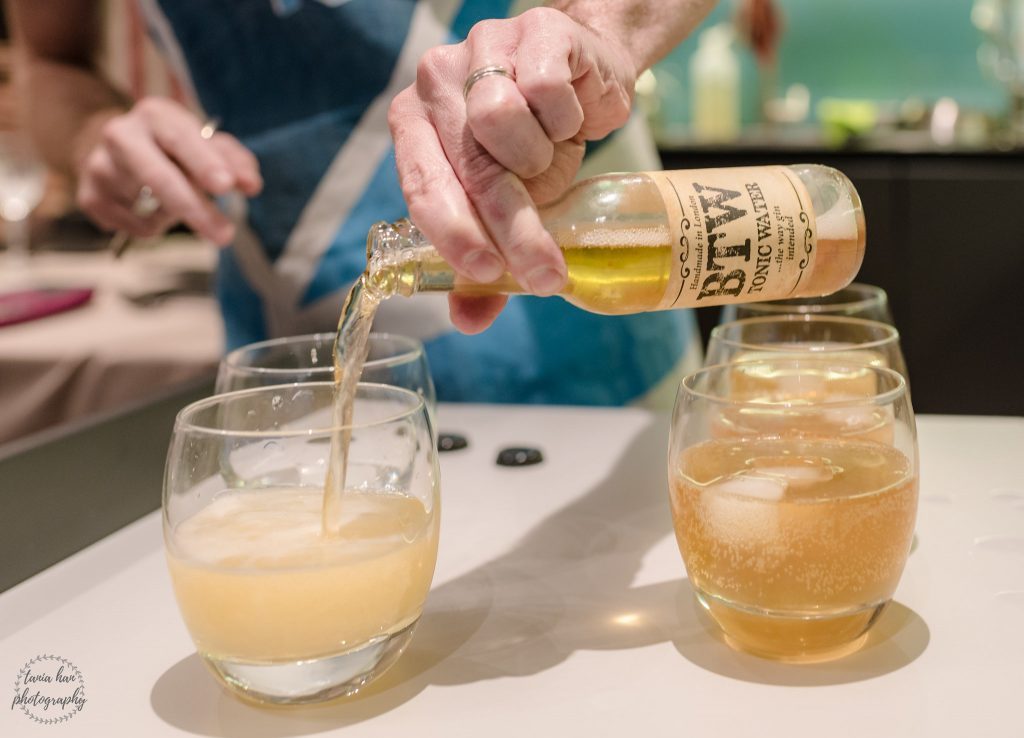
A natural Victorian recipe and made in Bermondsy. The key difference is that Quinine is extracted straight from South American Cinchona bark using heat & water. In contrast other tonic makers use extracts. The bark is bleached, leaving the characteristic clear mixer people have become used to. The BTW process of soaking the bark in small batches to extract the Quinine may take a little longer but it’s well worth the wait. Not only does it avoid all those unnatural nasties but also produces a well balanced, clean & crisp flavour. BTW has no other botanicals added; this prevents your palette becoming confused.
Starter
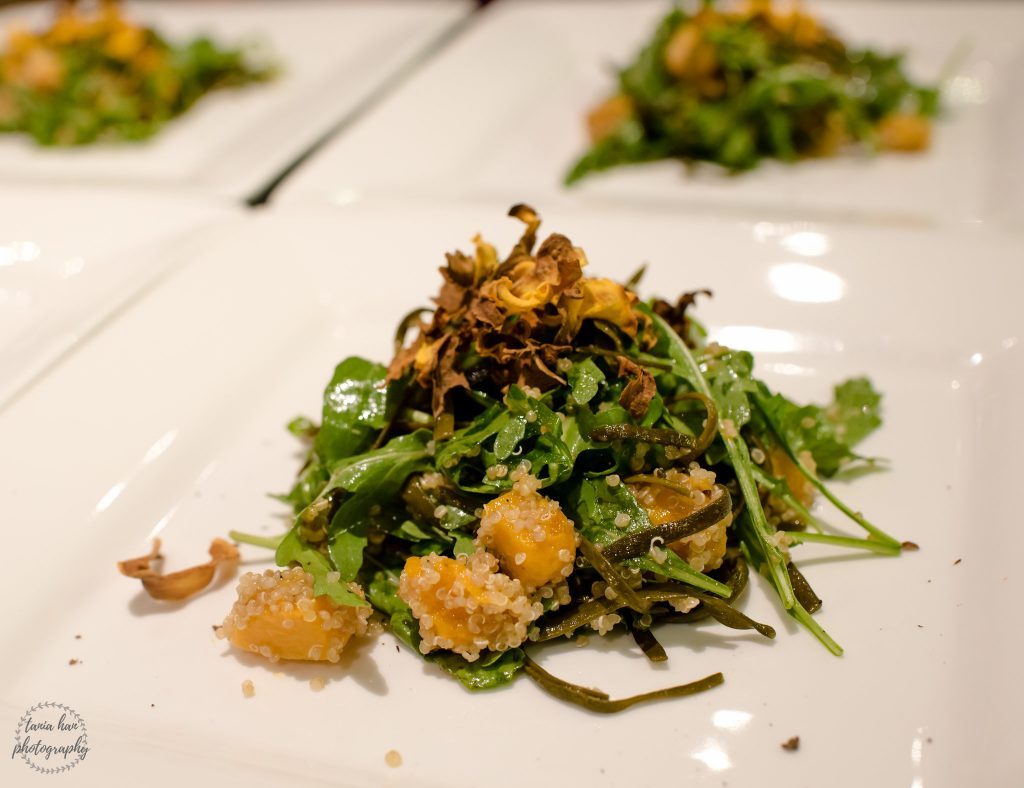
Cornish seaweed salad
Roasted butternut squash, courgette, quinoa, sea spaghetti, rocket, soaked raisins. English rapeseed oil, honey, balsamic.
English quinoa– Hodmedods
Grown in Essex. They work with British farmers to source pulses and beans from the UK rather than overseas. Reducing the carbon footprint of these important staples. Most of their quinoa range is now organic. A BBC Food & Farming Award 2017 finalist for Best Producer.
Sea Spaghetti Seaweed – The Cornish Seaweed Company
Sustainably harvested by hand in the clean waters off Cornwall. They harvest with scissors so that the seaweed grows back. Only harvest varieties that are in good supply. They have been licenced by the Soil Association and adhere to MSC standards. Supporting the local economy in an area of economic deprivation.
Main Course
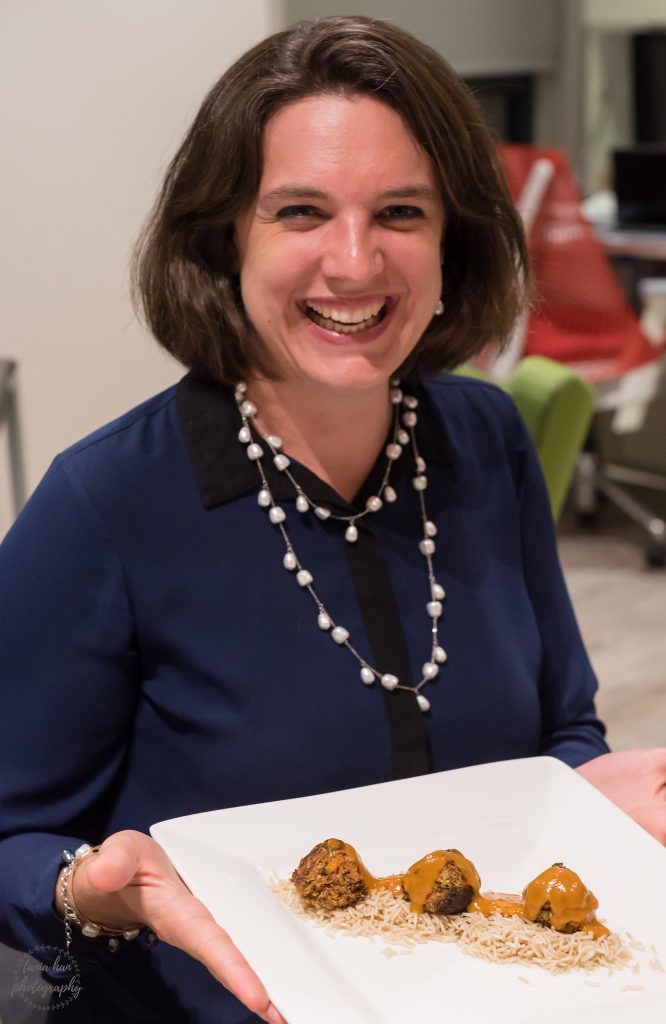
Vegetable hemp balls with Chinese Manchurian sauce on a bed of wild rice
Hemp Seeds – Hempen Organic Cooperative
Hemp has over 25,000 known uses, making it one of the most versatile plants on the planet. Low impact crop that does not need pesticides. Regenerates the soil and captures CO2. Hemp seeds have a wide range of vitamins and minerals with a 3:1 ratio of omega 6 to Omega 3. 25% protein, this is second only to soy. Great for plant based diets.
Rice – The Real Basmati Rice Company
Something we can’t grow in the UK! This company only work with small estates that cultivate rice in the most natural way without chemicals and the use of heavy machinery.
Why can’t we grow rice in the UK? Because the time between the risk of frosts is too short and the temperature during the rice flowering time can be too low. It would have to be grown inside.
Dessert
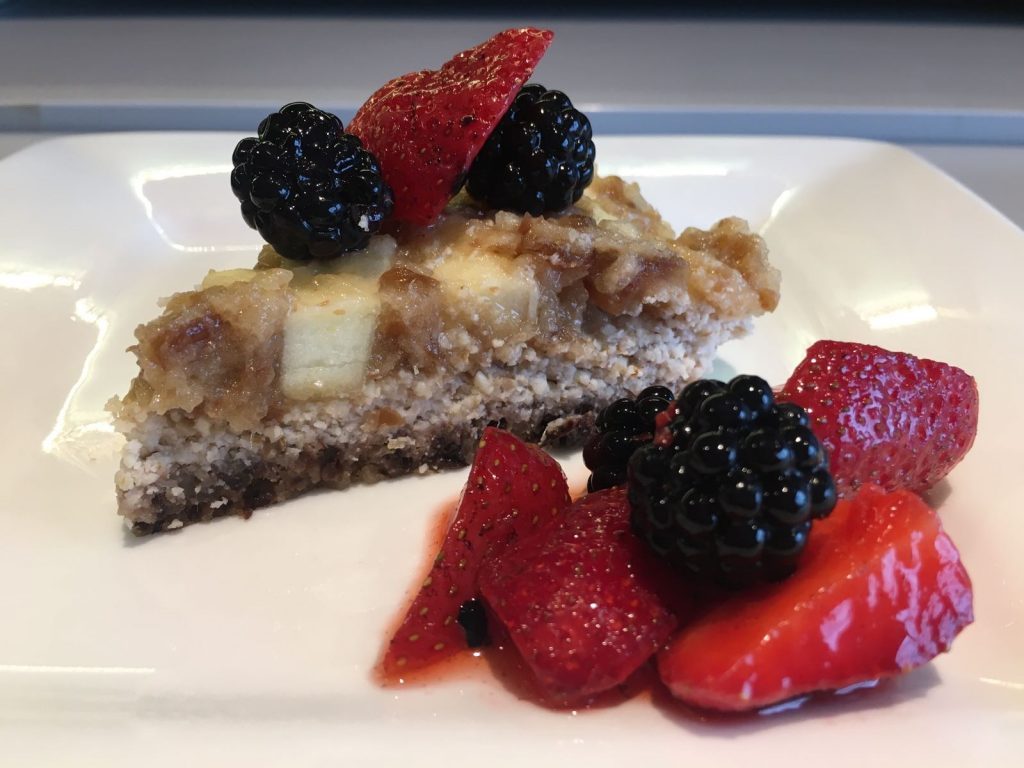
Raw vegan apple cheesecake with seasonal Kentish cobnuts blackberries & strawberries
Cobnuts – Farnell Farm
This nut is a variety of the hazel nut. A large oval shaped nut traditionally grown in Kent since the 1800s. Production peaked in 1913 when there were over 7000 acres of cobnut plants. Today only approximately 250 acres are commercially grown.
They are grown on Farnell farm without the use of chemicals. Sold fresh when ripe between late August and the end of October, they are also available dried from October to December. They can be eaten as they are or added to salads or pasta and are delicious roasted with a little salt. A great UK grown substitute for cashew nuts in plant based desserts.
Nut monoculture issues
California produces over 80 percent of the world’s almonds and 43 and 28 percent of the world’s pistachios and walnuts, respectively. The US now exports 70 percent of almonds.It takes about a gallon of water to grow one almond, and nearly five gallons to produce a walnut.
The massive mono-forest of roughly 600,000 acres in the central valley of California that grows about 82% of the world’s almonds.
Bees are bussed or flown around to pollinate monocultures. They only eat that food for a few weeks and mix with bees from all over the world / country. Its like an extreme form of freshers week and we know how that ends. Thought to be exacerbating Colony Collapse Disorder.
Honeybees that pollinate on a wider variety of plants have a more robust immune system than bees which pollinate on monocrops, even when the monocrops had higher protein content.
Apples – Purton House Organics (Wiltshire)
The farm has Soil Association Gold Award and are Wiltshire Wildlife Trust Corporate Green Award Winners, 2013.
Currently the UK imports around two third of the apples we eat. Technology now allows home grown apples to be stored more effectively and plug the gap in the seasons. Supermarkets are stocking UK apples but blame customer aesthetic fussiness for the high levels of wastage.


0 Comments