
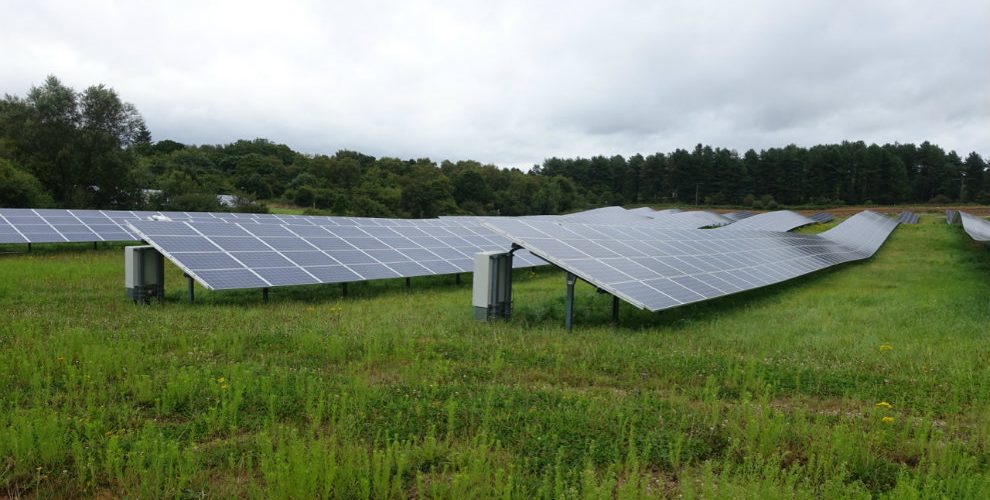
Have you ever wondered what it’s actually like on a solar energy farm? I have! When I discovered that a friend held the landscape ecology management contract for three solar farms I was super excited. I kept asking him questions when we saw each other, I am such a green geek 🙂 So when he asked if I would like to join him on one of his monthly visits to the farm I jumped at the chance to be his helper for the day.
A bit of background
- The solar farm is in the Dorset countryside (South of the UK).
- Built by Good Energy in 2015.
- The site is around 4-5 hectares in size.
- Used to be a a soft wood forest being farmed for wood products and christmas trees. Not very native or bio diverse!
- The site generates around 5MW per year. This powers the equivalent of 1,515 homes for a year (based on an average annual consumption of 3,300 kWh of electricity for a house) and saves 2,150 tonnes of CO2.
- Below is a summary of the biodiversity compensation and enhancement measures that were included in the local authority planning agreement. These have to be adhered to for the site to be compliant with it’s planning permission.
- Habitats within the solar farm site to be enhanced for native reptiles and amphibians.
- Section north west of the farm site to be managed for native reptiles and amphibians.
- 1 hectare of heathland to be created for reptiles, amphibians, and ground nesting birds.
- Wetland habitat to be created
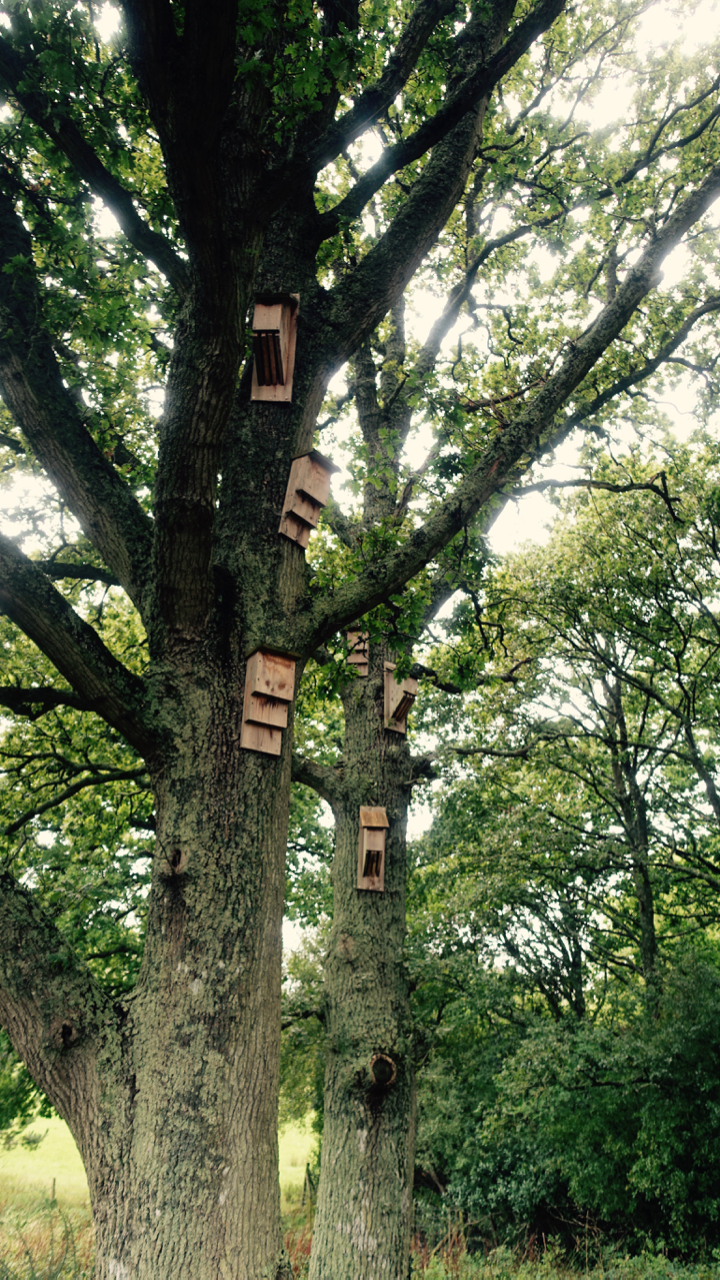
- Site boundary to be enhanced for roosting bats
- Landscape and ecology management plan to be written for the site
Landscape ecology is the science of studying and improving relationships between ecological processes in the environment and particular ecosystems.
The interview
In this short video I interview my friend Mike about the biodiversity improvements his company has implemented on the site, and the differences he has seen in the last two years.
The biodiversity enhancements on this site
Hedges
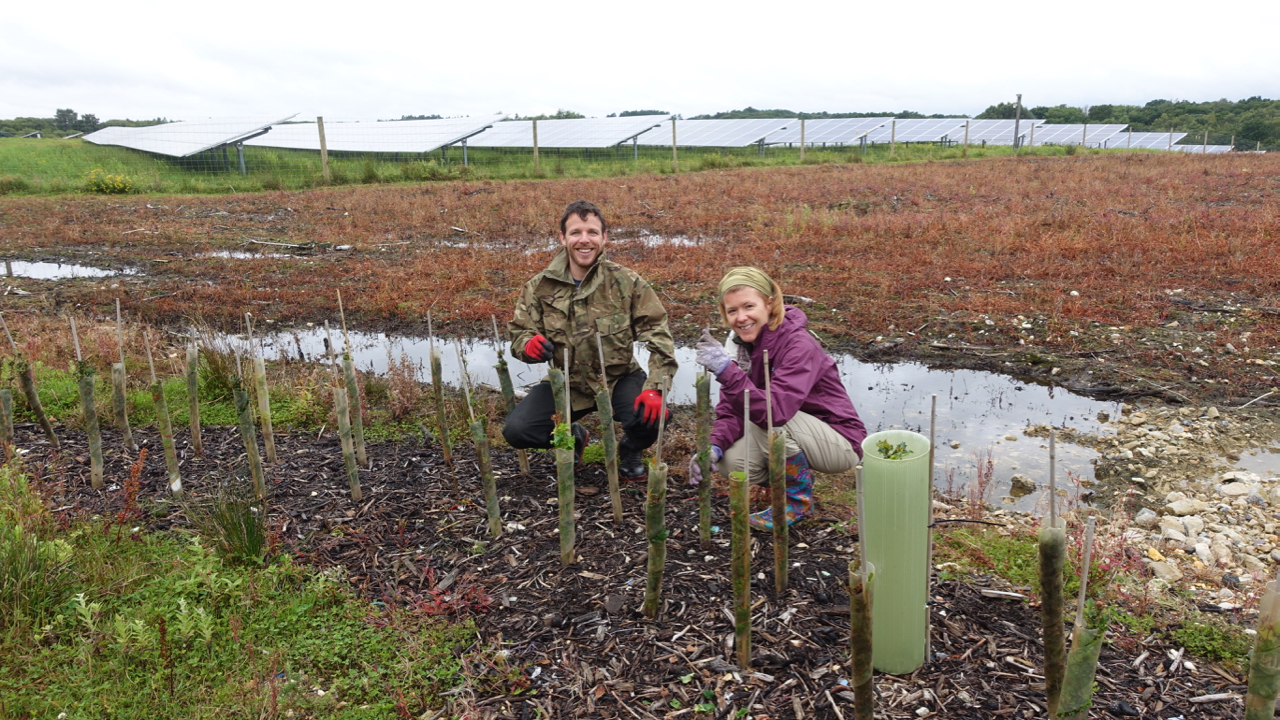
800 meters of hedge were planted as bare rooted plants in early 2016. During the visit we visually checking each plant. This is done monthly for at least 18 months. The aim is to ensures their rabbit / deer proof protectors are intact, remove weeds and the odd ants nest. Protective plastic covers need to stay in place until the plants are large enough to not be destroyed by passing mammals.

Heathland habitat
One hectare (without solar panels) has been reserved for being returned to heathland. This is to help the population of adders, sand lizards, slow worms and newts known to be on the site, to increase. However the process takes quite a bit of time and intervention. The land was used for forestry and other agriculture for so long that the soil quality has improved dramatically. Therefore the ph is now too high for heathland plants, and the invertebrates that love them, to thrive.
Encouraging wildlife
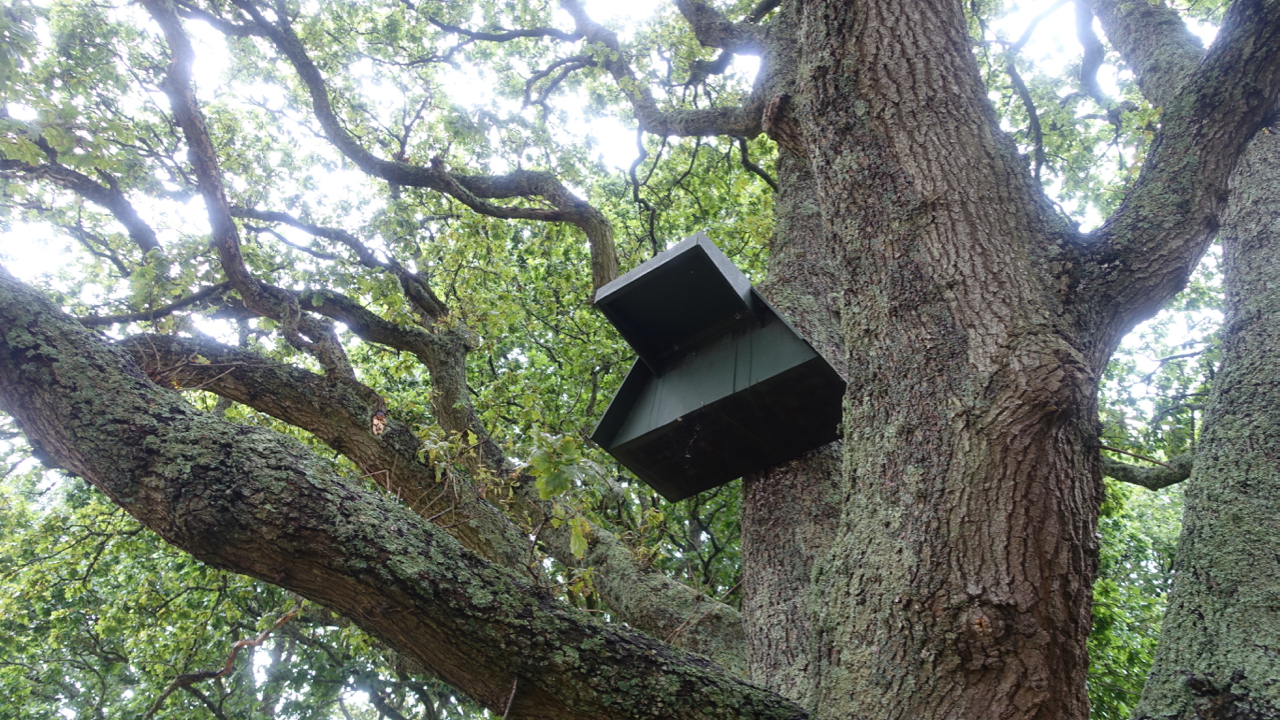
Bat boxes and a barn owl box has been put up on the site.
A large part of the site that does not contain solar panels has been left mostly wild. Mostly for the reptiles and amphibians! I am sure lots of other wildlife is enjoying it too.
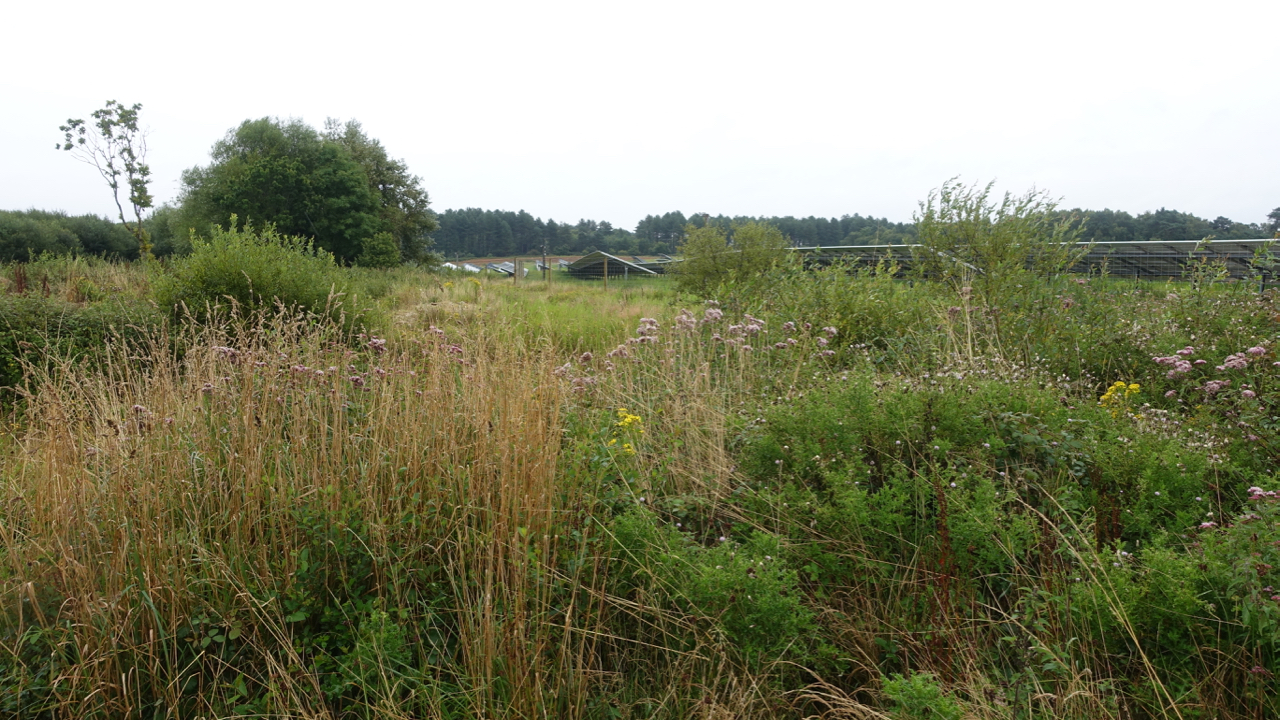
The site had a couple of ponds, these have been improved. There are now more, and they are different sizes and levels. This enables the wet areas to be utilised by a range of invertebrates who have different water requirements.

A man made hibernacular is pictured below. Essentially a winter resort for all the hibernating reptiles and amphibians. Keeps them safe from the winter weather and predators.

Wildflower meadow around the panels themselves. So great for all the pollinating insects, and especially the bees.

Visiting sheep?
Some solar farms (not this one) have sheep brought in to graze the grass / wildflowers at certain times of year. This practice feeds the sheep, “mows” the vegetation and fertilises the land, all at the same time. Mike thinks that there is not a suitable flock of sheep close enough to this farm for this to happen.
What can you do?
I love that the energy company I use (Good Energy) has set up such a beautiful and bio diverse site. This is just one of many. What has your energy company done to enhance the bio diversity of our countryside?
If you are thinking of moving to a Green Tariff for energy check out my previous post that compares some of the prices. I have also included a link about how to switch. Its easier than you might think.


1 Comments
Rosie (@greenrosielife)
Very interesting post that has nudged me to look at what France is doing with regard to green energy and biodiversity on their sites. Thank you! #GoingGreen