
Background
Things have come a long way in dental health, ancient Greeks and Romans were using crushed bones to clean their teeth, while toothpaste and powers came in to use during the 19th century. On visiting museums you will notice that early humans bodies often had signs of terrible tooth problems, and this was even cited as a cause of death in some cases. Good dental hygiene is certainly important to avoid expensive and painful dental work.
Have things gone too far?
Are we now being over sold products that we don’t really need, are not good for us, and not good for the environment? If you don’t have an underlying dental issue, are a responsible adult, and use correct brushing process, will making your own toothpaste / using a natural one do you any harm in the long run?
Fluoride in toothpaste
Fluoride is one of the more controversial elements of mainstream commercial toothpaste. It is poisonous to humans in certain doses (like many things) but the British Dental Association feel that as long as you don’t swallow it, or use too much, then it’s benefits out way the risks protecting us from tooth decay.
However the against camp feel that the wildly different levels of dosing, in terms of amount of paste used, amount swallowed and number of times a person cleans their teeth in a day, mean than toothpaste is not an effective way to get the correct dosing of fluoride. They suggest getting drops from a pharmacy, but these seem to no longer available in the UK. For more on this debate see Ethical Consumer Magazine.
Microbeads
The other controversial item in many mainstream toothpastes are microbeads. Most people now know that these are really bad for the marine environment, but it seems that some dental professionals are also concerned about them getting stuck in patients gums. This can lead to gum problems.
Proctor &Gamble have taken microbeads out of their toothpastes in 2016. Check your toothpaste ingredients for polyethylene as they don’t always state they contain microbeads. You can also download an app to check if any of your favourite products contain microbeads at www.beatthemicrobead.com
Companies behind the brands
The UK toothpaste market is dominated by Colgate-Palmolive and GlaxoSmithKline. These two pharmaceutical giants have many issues associated with them, as you may expect of any large multinational. From the use of unsustainable palm oil and animal testing, to unethical drug trials and healthcare fraud. No surprises here!
The issue of recycling
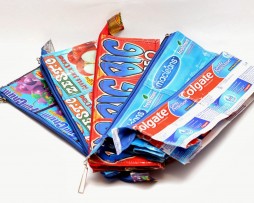
The other elephant in the room is the fact that toothpaste tubes are not currently recyclable in council recycling schemes. There are lots of ideas online for up-cycling them, including using them to hide money in while travelling. But toothpaste tubes create waste, non recyclable (in Council schemes) waste at that.
One option is to find your nearest Terracycle recycling point. Terracycle partner with big brands (in this case Colgate) to set up public collection points for certain types of waste. Essentially most things are recyclable if you have a dedicated waste stream with enough volume.
Details of what can be collected can be found here.
Find your nearest point here.
If you want to become a collection point then all the details of this and other recycling schemes can be found on the Terracycle website.
Next time…
In the next part I will look at brushing techniques, making your own toothpaste and toothpaste in a jar.


3 Comments
Reece
Greenpeace have a petition addressed to our new PM, calling for a ban on microbeads in anything. It currently has over 350,000 signatories, so anyone wanting to add their name to it can do so here – https://secure.greenpeace.org.uk/page/s/ban-microbeads
GreenDuckie
Thanks for highlighting this petition. The BBC news story broke just after I posted this, very exciting!